Roofing for Cottages and Seasonal Properties in the Ottawa Valley
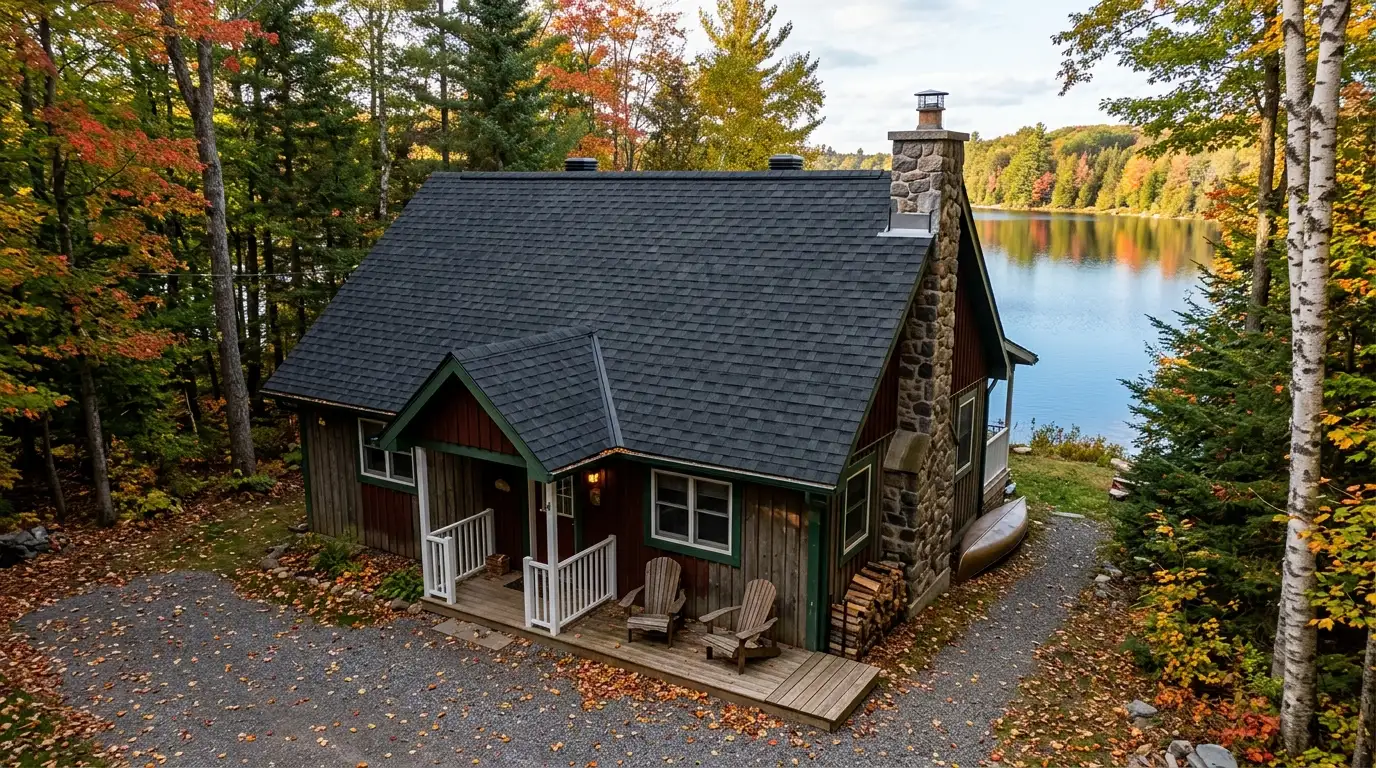
The Ottawa Valley is cottage country. From Calabogie to Big Gull Lake and across the lakes and rivers of Lanark County and beyond, seasonal properties are woven into the region's character. But a cottage roof faces a different set of demands than a year-round home in town — long stretches unoccupied, harsh winter weather with no one there to notice a problem, wildlife pressure, tree cover, and often difficult access. Choosing the right roof for a cottage means thinking about these factors, not just picking whatever works on a suburban house.
This guide covers what makes cottage and seasonal property roofing different, which materials suit these properties best, and how to protect a roof that may go months without anyone looking at it. McKay Roofing has roofed cottages and seasonal properties throughout the Ottawa Valley for more than 50 years — including lakeside projects like our standing seam and steel installations in cottage country.
Why Cottage Roofing Is Different
A cottage roof and a year-round home's roof do the same fundamental job, but the circumstances around a cottage change the priorities significantly.
The defining difference is that cottages are often unoccupied for long stretches — sometimes all winter. A small leak at a year-round home gets noticed within days when a stain appears on the ceiling. The same leak at an unoccupied cottage can go undetected for months, causing extensive damage before anyone discovers it. This single fact drives most of the other cottage roofing priorities: because problems go unnoticed, the roof needs to be low-maintenance, durable, and resistant to the failure modes that develop slowly.
Add in the setting — tree cover dropping debris, wildlife looking for shelter, heavy snow with no one to manage it, and often a location that is hard to reach — and it becomes clear why cottage roofing deserves its own thinking.
The Case for Low-Maintenance Materials
Because a cottage roof often goes unwatched, the single most valuable quality is low maintenance. A roof that demands regular attention is a poor fit for a property nobody visits for months at a time. This is the central reason metal roofing is so popular in cottage country.
A metal or steel roof offers exactly what a seasonal property needs: it lasts 40 to 50 years or more, requires very little maintenance, sheds snow efficiently, resists wildlife, will not rot or grow moss, and is highly resistant to the slow-developing problems that plague unwatched roofs. For a cottage owner who wants to install a roof and then essentially not think about it for decades, metal is often the ideal choice. Our guide on why homeowners should consider a metal roof covers the broader case, and standing seam vs. ribbed steel helps choose the profile.
Asphalt shingles remain a legitimate and more affordable choice for cottages, and quality architectural shingles perform well. The trade-off is a shorter lifespan and somewhat more vulnerability to the moss, debris, and slow-developing issues that unwatched roofs are prone to. For cottage owners balancing budget against longevity, our asphalt vs. metal comparison lays out the decision.
Handling Snow Load on an Unoccupied Property
Winter snow load is a serious cottage consideration precisely because no one is there to manage it. At a year-round home, an owner notices heavy accumulation and can arrange removal. At a cottage closed for the season, snow builds up storm after storm with no one watching — and a structural problem can develop entirely unseen.
This makes the roof's ability to handle or shed snow especially important for seasonal properties. Metal roofs shed snow naturally, preventing the heavy accumulation that threatens an unwatched structure — a major advantage for a closed-up cottage. Where snow shedding could endanger entrances or decks, snow guards manage where it releases.
For cottages that stay closed all winter, it is also worth arranging periodic checks or professional snow and ice removal after major storms, particularly for properties with flatter roofs or heavy tree cover. Knowing the roof can handle a winter unattended — or having a plan to manage it — is central to protecting a seasonal property.
Wildlife and Moisture Challenges
Cottages sit in the middle of nature, which brings pressures a suburban roof rarely faces.
Wildlife actively seeks shelter in unoccupied buildings. Squirrels, raccoons, birds, bats, and rodents look for ways into attics and under roof edges — and an empty cottage is an inviting, undisturbed target. Intact roofing, sound soffit and fascia, and sealed entry points are the defence. A metal roof and well-sealed edges give wildlife far fewer opportunities than aging shingles and gapping soffit.
Moisture and organic growth thrive under cottage conditions. Heavy tree cover means shade, dropped debris, and retained moisture — ideal conditions for moss and algae on shingles. Overhanging branches drop leaves and needles that trap water and clog drainage. Keeping trees trimmed back and choosing materials resistant to organic growth (metal, or algae-resistant shingles) helps significantly.
Ventilation and condensation matter especially at a cottage that is heated intermittently or not at all. Temperature swings in an unoccupied building can drive condensation in the attic. Proper attic ventilation keeps the roof structure dry through those cycles.
Access Challenges
Many Ottawa Valley cottages are genuinely remote — down long private lanes, on islands, across water, or in locations that are difficult to reach with equipment and materials. This affects roofing projects in practical ways.
Access influences the project timeline, the logistics of getting materials and crew to the site, and the cost. A roof that is hard to reach is harder to service later, which is another argument for choosing a durable, low-maintenance material at the outset — the fewer future visits the roof requires, the better for a hard-to-access property. It also makes doing the job right the first time especially important, since coming back to fix a problem at a remote cottage is far more involved than at a home in town.
An experienced local contractor who knows the region understands these access realities and plans for them. Our thoughts on choosing local roofing contractors apply with particular force to cottage work, where familiarity with the area and its access challenges makes a real difference.
Timing a Cottage Roofing Project
Seasonal properties have their own natural rhythm for roofing work. The window when the cottage is accessible, the weather cooperates, and the owner can be present to make decisions is often narrower than for a year-round home.
Many cottage owners plan roofing projects for the shoulder seasons — late spring after the roads and grounds have dried, or early fall before winter closes in — coordinating with when they open or close the property. Planning ahead matters more for cottages than for town homes, because the accessible window is limited and remote projects require more logistical coordination. Engaging a contractor early to assess the property and plan the timing produces a smoother project. Our guide on preparing your home for a roof installation covers the general preparation, most of which applies to cottages too.
Protecting a Roof You Do Not See Often
The overarching principle of cottage roofing is protecting an asset that goes unwatched. A few practical measures make a real difference:
- Choose durability over economy where the budget allows — a longer-lasting, lower-maintenance roof is worth more on a property you rarely inspect
- Arrange periodic inspections — a professional look at the roof when you open or close the cottage catches problems early. Our roof inspection guide explains what these involve
- Keep trees trimmed back from the roof to reduce debris, shade, and wildlife access
- Seal wildlife entry points and keep soffit, fascia, and roof edges intact
- Ensure proper ventilation to manage condensation through unoccupied periods
- Have a winter plan for snow, whether that is a snow-shedding roof or arranged removal after major storms
Taken together, these measures let a cottage owner enjoy the property rather than worrying about the roof over the long months when no one is there.
Get Your Free Estimate
Planning a roof for your cottage or seasonal property? Our team knows the Ottawa Valley's lakes and back roads, understands the demands of seasonal properties, and will recommend the right low-maintenance solution — no obligation.
Fill out the form or reach us directly.
Call us at (613) 259-5766 or contact us to discuss your cottage roofing project.
A Roof Built for Cottage Life
A cottage roof has a harder job than most — protecting a property through long unwatched stretches, harsh winters, wildlife pressure, and difficult access. The right approach prioritizes durability and low maintenance, plans for snow and moisture, and gets the installation right the first time because return visits are costly. For Ottawa Valley cottage and seasonal property owners, choosing wisely means years of peace of mind rather than worry every time you lock up for the season. McKay Roofing has roofed cottage country across the region for more than 50 years.