Asphalt Shingles vs. Metal Roofing: Which Is Right for Your Lanark Home?
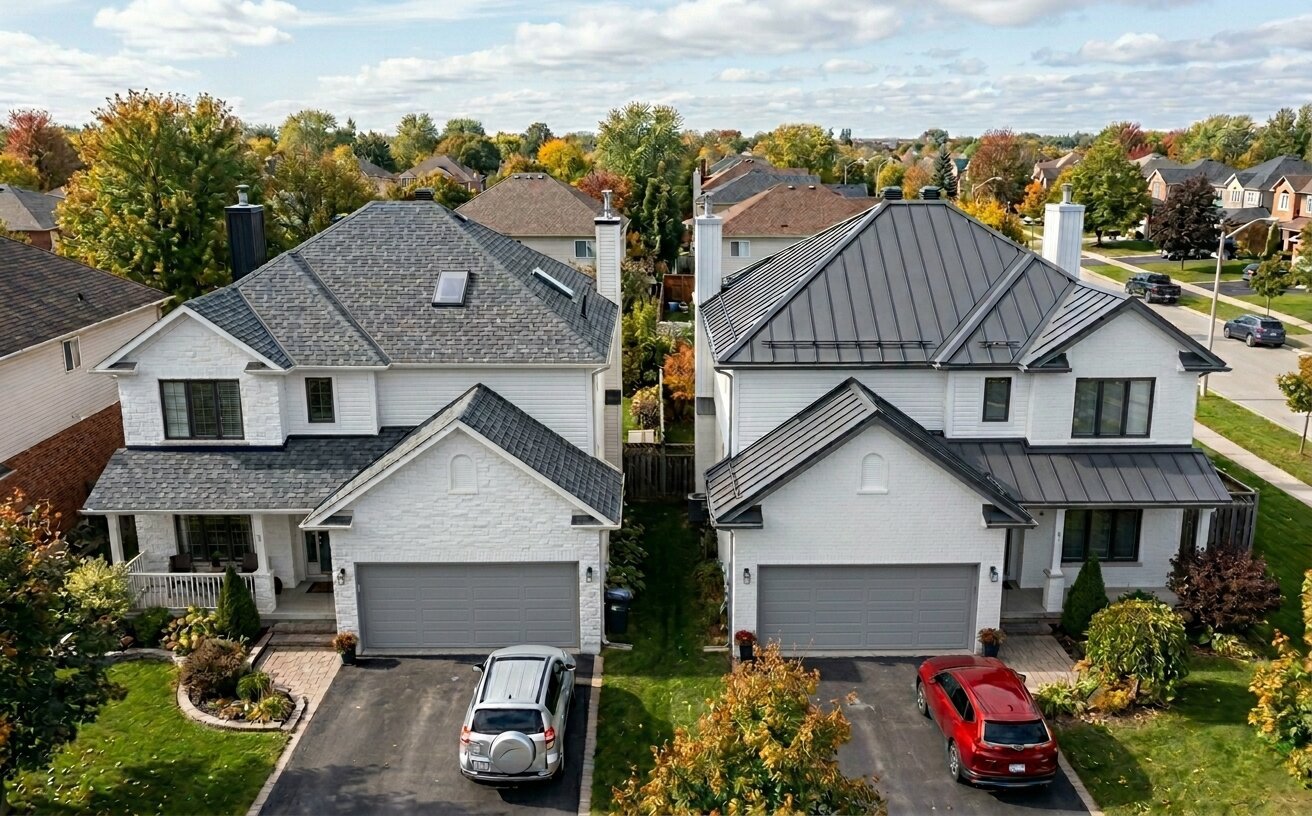
The single biggest decision a Lanark County homeowner makes during a roof replacement is the material. Asphalt shingles and metal roofing are the two dominant options across Ontario, and both have legitimate advantages — and legitimate drawbacks. After more than 50 years installing both materials across the Ottawa Valley, we have learned that the right choice depends entirely on the homeowner, the home, and the priorities driving the decision.
This guide compares asphalt shingles vs. metal roofing head-to-head across every factor that matters. No pro-metal lean, no pro-shingle bias — just honest trade-offs so you can decide what suits your home best.
At a Glance: How They Compare
Before the detailed breakdown, here is the high-level picture:
- Upfront cost: Asphalt shingles are roughly half the cost of metal. Metal is the more expensive starting point.
- Lifespan: Asphalt typically lasts 20–30 years. Metal commonly lasts 40–50+ years.
- Maintenance: Both are low-maintenance. Metal slightly edges out asphalt for long-term durability.
- Snow performance: Metal sheds snow efficiently but requires snow guards. Asphalt holds snow but is more prone to ice dams.
- Aesthetics: Asphalt offers more colour and texture options that look "traditional." Metal looks distinctive and modern, with finishes that imitate shingles or slate.
- Resale impact: Both add value at sale. Metal commands a small premium in certain markets.
The right material depends on which of those factors matters most to you. Let's break each one down.
Upfront Cost
Asphalt shingles cost less to install than metal — typically about half the price for an equivalent roof. The difference comes from the material itself, the labour intensity of metal installation, and the higher-grade underlayment systems metal often requires.
Within each category, premium tiers cost more than entry-level options. Architectural asphalt shingles cost more than basic three-tab shingles. Standing seam metal costs more than ribbed steel panels. Both materials have a range of price points.
For homeowners on a tight budget, or for short-term ownership where a long lifespan does not pay back, asphalt is the more accessible starting point. For a deeper breakdown of what shapes the final number, see our guide on what affects the cost of a new roof in Ontario.
Lifespan and Long-Term Cost
This is where the comparison shifts. Asphalt shingles in Ontario typically last 20 to 30 years depending on the product tier and ventilation. Architectural shingles last longer than basic three-tab. Premium designer shingles carry the longest warranties.
Metal roofs commonly last 40 to 50 years, and we routinely see properly installed metal roofs in the Ottawa Valley still performing well past 50. The paint finish typically carries a 40-year manufacturer warranty, but the steel substrate itself often outlasts the finish.
Over a 50-year period, an average homeowner might replace an asphalt roof twice while a metal roof installed once is still going strong. When the lifecycle math is run honestly, metal is typically less expensive per year of service even though it costs more upfront. The catch is that you have to actually stay in the home long enough to realize the savings.
Maintenance Requirements
Both materials are low-maintenance compared to wood, tile, or slate. Neither needs annual treatment or refinishing.
Asphalt: Inspect annually, especially after major storms. Replace damaged shingles as needed. Clean gutters and remove debris. Address moss or algae growth promptly. Granule loss is normal toward end-of-life; sudden heavy loss is a warning sign.
Metal: Inspect annually for fastener integrity, sealant condition, and any damage at penetrations. Clear debris from valleys. The paint finish itself requires no maintenance. Snow guards may need periodic check if installed.
Metal has a slight edge here. Asphalt's vulnerability to wind damage, granule loss, and ice damming means more potential intervention over its lifespan. Metal, once properly installed, largely takes care of itself.
Performance in Lanark County Winters
Ottawa Valley winters are the real proving ground for any roof. Here is how the two materials handle our specific conditions:
Snow Behaviour
Asphalt shingles have a textured surface that holds snow in place. This sounds like a good thing, but accumulated snow on asphalt is a leading contributor to ice dam formation, particularly when attic ventilation is inadequate.
Metal roofs shed snow efficiently — sometimes too efficiently. Without snow guards, accumulated snow can release suddenly as a roof avalanche, which is dangerous to people, vehicles, and landscaping below. Snow guards solve this but add to the installation cost.
Ice Dams
Asphalt roofs are far more vulnerable to ice damming. The textured surface holds snow that melts and refreezes at the eaves, and the shingle seal can be compromised by water backing up. See our ice dam overview for the mechanics.
Metal roofs largely shed snow before ice dams can form, especially when properly insulated and ventilated. This is one of the strongest practical arguments for metal in heavy-snow zones like Lanark County.
Wind Resistance
Both materials can be wind-rated, but metal generally handles extreme wind events better. Properly installed metal panels are typically rated for 200+ km/h winds. Asphalt shingles vary by product — premium architectural shingles are rated for 200+ km/h, but standard products may be rated lower.
Aesthetics and Curb Appeal
This is the most personal factor in the comparison.
Asphalt looks "expected" on most Ontario homes. It comes in dozens of colours and several textures, and architectural shingles convincingly imitate the look of cedar shake or slate. Asphalt is rarely the wrong choice aesthetically — it suits virtually every home style.
Metal looks distinctive. Standing seam panels look modern and architectural. Ribbed steel has a more utilitarian appearance. Metal shingle profiles can imitate slate, tile, or shake at a fraction of the weight. Colour options are broad, with premium finishes that resist fading for decades.
Many Lanark homeowners choose asphalt because it preserves the traditional look of older or heritage-style homes. Others choose metal precisely because they want their home to stand out. Neither choice is wrong — it depends on what you want your home to look like for the next 30 to 50 years.
Noise During Rain and Hail
This is one of the most common concerns we hear about metal roofing, and it deserves an honest answer.
The "metal roofs are loud" perception comes from old barn and shed installations where metal sits over an open frame with no insulation or ceiling beneath. On a properly installed residential metal roof — with solid decking, underlayment, attic insulation, and drywall ceilings below — the noise difference between metal and asphalt during normal rainfall is minimal.
During heavy hail, both materials produce noticeable sound. Hail on asphalt is a steady patter; hail on metal can be sharper but is usually not dramatically louder once attic insulation and interior finishes are factored in. Most homeowners adjust to the sound within their first storm season.
Weight and Structural Considerations
Asphalt shingles weigh more per square than metal — typically 2 to 3 times more. Metal is one of the lightest residential roofing materials available.
This matters when re-roofing an older home with potential structural concerns, or when installing over an existing roof (where local code allows). Metal puts less stress on the framing and decking. Asphalt, while heavier, is still well within the design load of any standard residential structure.
Energy Efficiency
Metal roofs reflect more solar radiation than asphalt, especially when finished in lighter colours with reflective coatings. In summer, this can mean a noticeably cooler attic and lower air conditioning costs. The energy savings are real but modest — typically a 10 to 25 percent reduction in cooling-related energy use depending on the home.
Asphalt absorbs more solar heat. For homes in cooler climates this can be a small heating advantage in winter and a small cooling disadvantage in summer. The net energy difference between the two materials over a year is small in most Ontario homes.
For more on energy considerations, our overview on how roofing can help save energy covers the broader picture.
Warranty Coverage
Both materials carry substantial manufacturer warranties, but the structures differ:
Asphalt warranties range from 20-year limited coverage on entry-level products to lifetime non-prorated coverage on premium architectural shingles. The strongest asphalt warranty available — the GAF Golden Pledge — combines lifetime shingle coverage with up to 25 years of workmanship protection. McKay is a certified GAF Master Elite contractor, which is required to register this tier.
Metal typically carries 40 to 50 year warranties on the paint finish from major manufacturers like Vicwest, Ideal, and Agway. The steel substrate is often covered even longer, sometimes against perforation for the lifetime of the roof.
Our complete guide on understanding roof warranties in Ontario explains how to compare manufacturer and workmanship coverage across both material types.
Resale Value
Both materials add value at sale, but the picture is different for each.
A new asphalt roof is a strong selling point because most buyers expect it, recognize the value, and know there will not be an expensive roof bill anytime soon. Studies typically show 60 to 70 percent recoupment of roof replacement cost at sale.
A new metal roof is a stronger selling point in certain buyer segments — particularly rural and country properties, modern architectural homes, and energy-efficiency-focused buyers. Metal can command a small premium at sale and may attract more interest in specific markets. In standard suburban markets, the premium is more modest.
Neither material is the "wrong" choice for resale. Both protect home value during ownership and add appeal at sale.
Environmental Impact
Asphalt shingles are petroleum-based and typically end up in landfill at end-of-life. Some Ontario contractors now recycle asphalt shingles into road materials, but the option is not universal. Asphalt has a meaningful environmental footprint.
Metal roofing is made with significant recycled content (often 25 to 95 percent depending on the product) and is fully recyclable at end-of-life. Metal also lasts roughly twice as long, halving the lifecycle impact of manufacturing and replacement.
If environmental impact is a priority, metal is the more sustainable choice. For more on eco-conscious roofing, see our piece on environmentally friendly roofing options.
Which Material Is Right for You?
The honest answer depends on your priorities. Here is the framework we use when helping Lanark homeowners choose:
Choose asphalt shingles if:
- You want the lowest upfront cost
- You plan to sell within 10–15 years
- You prefer a traditional, "expected" look
- Your home has a heritage style that suits shingle aesthetics
- You are working within a tight renovation budget
- You want maximum colour and texture options
Choose metal roofing if:
- You plan to stay in your home for 20+ years
- You want the longest lifespan and lowest lifecycle cost
- Your home is in a heavy snow zone (most of Lanark County qualifies)
- Ice dams have been a recurring problem
- You want a distinctive, modern, or architectural look
- Environmental impact is a priority
- You want the longest warranty coverage available
- You are willing to invest more upfront for long-term value
The Bottom Line
There is no universal "winner" between asphalt shingles and metal roofing. Asphalt suits homeowners prioritizing upfront affordability, traditional aesthetics, and shorter ownership horizons. Metal suits homeowners prioritizing longevity, lifecycle cost, and snow performance, and who plan to stay long enough to realize the long-term value.
The right answer for your home depends on your budget, your timeline, your aesthetic preferences, and how your specific roof handles winter. A professional assessment of your home — including ventilation, attic condition, structural framing, and intended ownership timeline — is the best way to make the decision with confidence.
Get Your Free Estimate
Not sure which material is right for your home? Our team will assess your roof in person and walk you through both options — what each would cost, how each would perform, and what we would recommend for your specific situation.
Fill out the form or reach us directly.
Call us at (613) 259-5766 or contact us to schedule your on-site assessment.