Soffit, Fascia, and Eaves Repair: The Quiet Components That Protect Your Roof
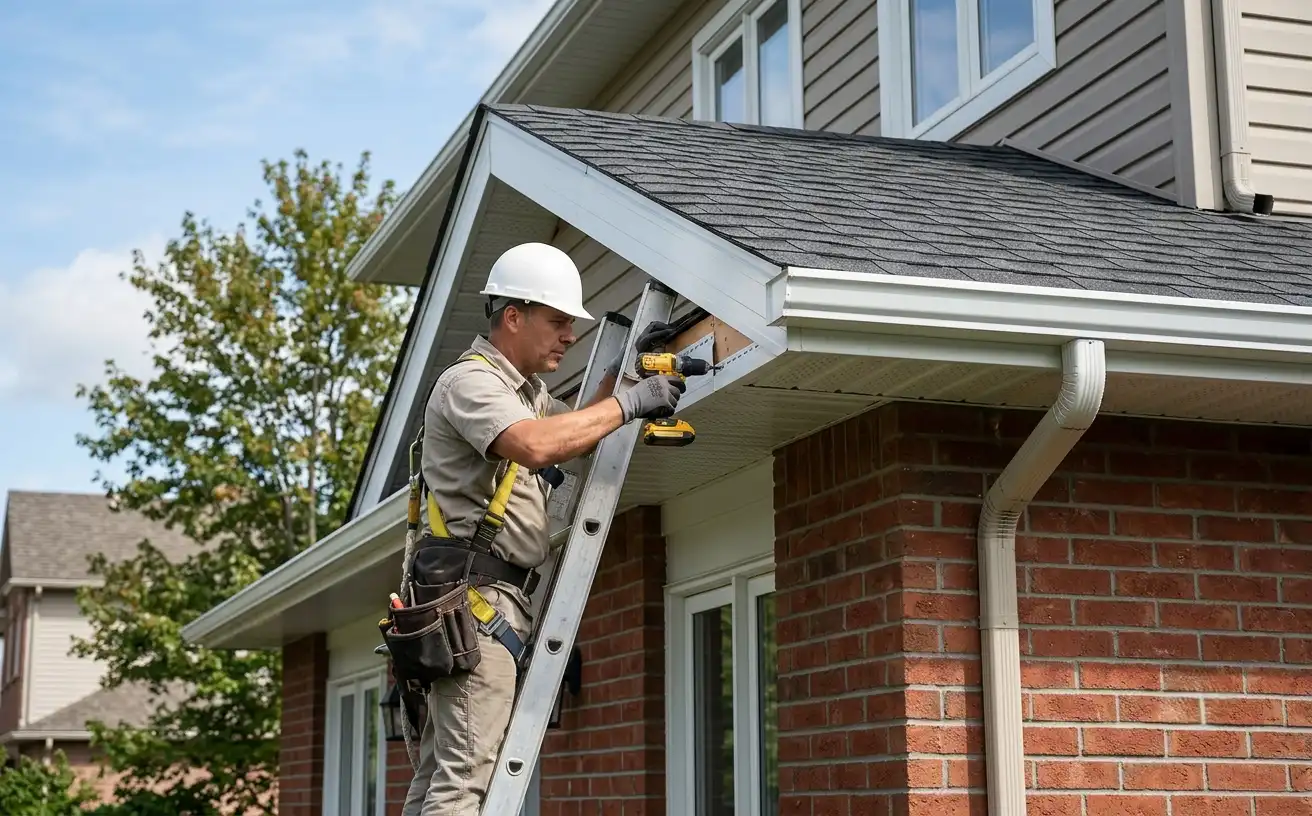
Most homeowners never think about their soffit and fascia — until they start to fail. These components sit quietly at the edge of every residential roof in Ontario, protecting the roof structure from water, pests, and heat while allowing the attic to breathe. When they are working properly, they are invisible. When they are not, the damage they allow can quickly reach the roof deck, the attic, and even the interior of the home.
After more than 50 years of roofing work across the Ottawa Valley, we have replaced our share of rotted fascia and torn soffit. This guide covers what these components actually do, how to spot problems early, and when repair is enough versus when full replacement is the smarter path.
What Each Component Actually Is
The three terms often get used interchangeably, but each refers to a specific part of the roof edge system.
Fascia
The fascia is the vertical board that runs along the eaves — the edge of the roof — where the eavestrough is typically mounted. It caps off the end of the roof rafters and gives the roof edge a finished appearance. Fascia is the most visible of the three components and takes the brunt of the weather on any residential roof.
Soffit
The soffit is the horizontal underside of the roof overhang, tucked between the fascia and the exterior wall of the house. Look up under an eave and what you see overhead is the soffit. On most homes it contains ventilation openings that allow air to enter the attic space.
Eaves
The eaves are the overhanging edges of the roof — the part that extends past the exterior wall. The eaves protect the walls and foundation from rainwater running down the face of the building. The soffit is the underside of the eave, and the fascia caps its end.
Together, these three components form the edge system that finishes and protects the roof.
How They Work Together as a System
Individually, each component has a specific role. Together, they do something more important: they manage air and water at the most vulnerable transition point on the entire roof — the eave line.
Water management. The fascia holds the eavestrough. The eavestrough directs water off the roof and away from the building. The soffit shields the underside of the overhang from wind-driven rain. When one component fails, water finds a path into places it should not go.
Ventilation. Air enters the attic through soffit vents, travels upward through the attic space, and exits through the ridge or roof vents. This continuous flow keeps the attic dry, extends shingle life, and prevents the ice dam formation that plagues Lanark County homes each winter. Our attic ventilation guide covers how the airflow system works in detail.
Pest exclusion. Intact soffit and fascia keep out squirrels, raccoons, birds, wasps, and rodents that would otherwise nest in the attic. A single loose panel is often all it takes for wildlife to find a way in.
Aesthetic finish. The soffit and fascia give the roof edge a clean, deliberate appearance. Aging or damaged eave finishes make an otherwise well-maintained home look neglected.
Signs of Damage
Problems in this area rarely announce themselves loudly. Watch for:
- Peeling paint on the fascia — an early sign of moisture behind the surface
- Soft or spongy fascia when pressed — active rot; the wood is compromised
- Sagging gutters — the fascia can no longer hold their weight, often due to underlying rot
- Water stains under the eaves — evidence of leaks reaching the soffit
- Sagging, warped, or loose soffit panels — moisture damage or fastener failure
- Visible gaps or holes — an open invitation to pests
- Nests or debris in the attic corners — animals have already found their way in through a compromised soffit
- Persistent attic condensation or moisture — soffit vents may be blocked, damaged, or missing entirely
- Ice dams recurring at the same eave every winter — often points to a ventilation failure rooted in the soffit
Any of these signs justifies a closer look. Fascia and soffit problems that are caught early are inexpensive to fix. The same problems left for years often lead to roof deck damage and interior water intrusion.
The Ventilation Role — Why Soffit Vents Matter
Of all the roles the soffit plays, ventilation is the one most often overlooked and most often mishandled. Soffit vents are the primary intake point for the attic ventilation system. Without adequate soffit intake, ridge and roof vents cannot exhaust properly, and the attic stagnates.
Common problems we see in Ottawa Valley homes:
- Painted-over vents — solid paint blocks the airflow through perforated aluminum vents
- Insulation blocking vents from inside the attic — happens when insulation is added without baffles at the eaves
- Vent panels installed with the perforations covered by adjacent panels — an installation error that eliminates airflow entirely
- Aging soffit without vents at all — older homes may have been built without adequate intake
When ventilation is inadequate, the consequences ripple through the whole roof system: improper ventilation shortens shingle life, promotes mould growth in the attic, and drives up cooling costs in summer. When we replace soffit as part of a larger roof project, correcting the ventilation is often the biggest single improvement to how the entire roof performs.
Materials: Aluminum, Vinyl, and Wood
Modern soffit and fascia come in three main materials, each with its own trade-offs.
Aluminum
Aluminum is the standard for most Ontario homes and the material we install most often. It does not rot, does not warp with temperature swings, resists insects, and holds paint well. Aluminum soffit typically comes pre-perforated for ventilation, and aluminum fascia caps existing wood fascia to give a finished, low-maintenance surface. Colour options match most residential aesthetics, and lifespan is typically 30 to 40 years with minimal maintenance.
Vinyl
Vinyl is lighter and less expensive than aluminum but more prone to fading and brittleness in extreme cold. It performs adequately in most residential applications but can crack under impact and does not hold its colour as well over decades of UV exposure. Vinyl is a reasonable choice for budget-conscious projects but is not our first recommendation for Ontario climates.
Wood
Wood is the traditional material and still the choice for many heritage restorations. It looks beautiful when maintained but requires periodic painting or sealing, and it is vulnerable to rot, insects, and moisture. For most homeowners, the maintenance burden makes wood impractical outside of a specific aesthetic requirement.
Common Repair Scenarios
Most soffit and fascia problems fall into one of a few common patterns:
Localized fascia rot behind a failing gutter. The most common scenario in the Ottawa Valley. A gutter section overflows or leaks for years, water saturates the fascia behind it, and rot spreads outward. The repair involves removing the damaged section, replacing the rotted wood, and often replacing the gutter alongside it. Bundling this work with eavestrough replacement is almost always more cost-effective than doing them separately.
Wildlife entry point. A squirrel or raccoon has torn or chewed through a soffit panel to access the attic. The animal needs to be evicted first, the entry point sealed, and the damaged panel replaced. Any interior damage caused by the intrusion also needs assessment.
Storm damage. High winds can tear soffit and fascia loose, especially at exposed corners. Post-storm inspections should always include the eave line — see our storm damage inspection guide for the full checklist.
Whole-house re-cladding. When the wood soffit and fascia have aged past the point of reasonable repair, replacing the entire system with aluminum is often the smartest long-term investment. The upgrade typically eliminates decades of ongoing maintenance and dramatically improves the home's appearance.
Repair vs. Full Replacement
Not every soffit or fascia issue requires a full replacement. The decision comes down to how widespread the damage is and how old the existing system is.
Repair makes sense when:
- Damage is isolated to one or two sections
- The rest of the system is in good condition and has meaningful life left
- The existing material is still commonly available for matching
- Cost of localized repair is meaningfully less than full replacement
Replacement makes sense when:
- Multiple sections show damage, warping, or rot
- Wood soffit or fascia is nearing end-of-life across most of the home
- Ventilation is inadequate and needs to be redesigned
- You are already replacing the roof and want an integrated system with matched aesthetics
- The existing material has been discontinued or is no longer matchable
For a broader look at when to fix versus replace across your whole roofing system, our roof repairs overview covers the framework.
Aesthetic Considerations
Soffit and fascia are visible from every angle of the property, and their appearance affects how the whole home reads. When replacing, consider:
Colour coordination. Matching soffit and fascia to the existing trim, siding, or roof creates a cohesive look. Contrasting choices — dark fascia against light siding, for example — can make architectural details pop.
Profile and detailing. Vented soffit panels come in different perforation patterns. Fascia caps come in various widths and profiles. Small choices compound into meaningful differences in how finished the home looks.
Integration with eavestrough. Coordinated colours between fascia, eavestrough, and downspout tie the whole edge system together visually.
Cleanup and Site Care
Soffit and fascia work generates debris — old panels, rotted wood, insulation displaced during the repair. A professional installation includes proper cleanup so the property looks the same when we leave as it did when we arrived (minus the problem you called us about). Our approach to residential job site cleanup applies to eave work just as much as to full roof replacements.
Why Choose an Established Local Contractor
Soffit and fascia work sits at the intersection of roofing, carpentry, and finish trade. It requires access at height, familiarity with older construction methods, and the skill to blend new material with existing details. Working with an established local contractor — see our thoughts on why to choose local roofing contractors — means the crew has seen your type of home before and knows what to expect when they open up the eave line.
Costs vary based on the extent of damage, material choice, and whether the work is being done as a standalone repair or bundled with a larger project. For a broader look at how projects like this get priced, see our guide on what affects the cost of a new roof in Ontario.
What Happens When It Is Ignored
Soffit and fascia damage that gets ignored does not stay contained. The predictable progression looks like this: fascia rots, gutter fails, water gets behind the eave, soffit softens, insulation gets wet, mould develops in the attic, roof deck deteriorates from below, and eventually water enters the interior. What started as a $500 fascia repair becomes a $5,000 interior remediation.
Meanwhile, wildlife enters through a compromised soffit and causes attic damage that takes months to discover. And ice dams recur every winter because the ventilation system is broken. The cascade is always faster and more expensive than the original fix would have been.
Emergency situations sometimes develop from ignored soffit or fascia issues — our emergency roof leak repair team stabilizes the immediate damage, but the underlying eave repair is what actually solves the problem.
Get Your Free Estimate
If you are noticing peeling fascia, sagging gutters, wildlife activity, or attic moisture, our team will walk your home and assess the eave line honestly — repair where repair makes sense, replace where replacement is the smarter path.
Fill out the form or reach us directly.
Call us at (613) 259-5766 or contact us to schedule your on-site assessment.
The Quiet Components That Matter Most
Soffit, fascia, and eaves do not get much attention — until they fail. Catching problems early, keeping ventilation clear, and treating the eave line as part of the roofing system (not an afterthought) is the difference between decades of trouble-free performance and a cascade of avoidable damage. For Lanark, Perth, Carleton Place, Almonte, and the broader Ottawa Valley, McKay Roofing has been handling this quiet, essential work for more than 50 years.