Roof Snow and Ice Removal: When It's Necessary and How It's Done Safely
Ottawa Valley winters pile a remarkable amount of snow onto roofs. Most of the time, a well-built roof handles that load without a problem. But under certain conditions — heavy snowfall, repeated storms, freeze-thaw cycles, and accumulating ice — the weight and the ice buildup can threaten both the roof and the safety of the people below it. Knowing when roof snow and ice removal is genuinely necessary, and why it should be done professionally, protects your home and your family through the worst of winter.
This guide explains when snow load becomes a concern, the warning signs to watch for, how professional removal is done safely, and why climbing up to do it yourself is riskier than most homeowners realize. McKay Roofing has provided snow and ice removal across the Ottawa Valley for decades — see our residential snow and ice removal and commercial snow and ice removal services.
When Snow Load Becomes a Concern
Roofs are engineered to carry a substantial snow load, so occasional snowfall is not cause for alarm. The concern arises when snow accumulates faster than it clears and the load approaches or exceeds what the structure was designed to handle. Several situations increase the risk:
- Repeated heavy snowfalls with no melting between them, building up deep accumulation
- Wet, heavy snow, which weighs far more per centimetre than light powder
- Freeze-thaw cycles that turn fluffy snow into dense, heavy ice layers
- Drifting that piles snow unevenly, concentrating weight in specific areas
- Low-slope and flat roofs, which do not shed snow the way steep roofs do
- Ice accumulation at eaves and in valleys, which adds concentrated weight and drives water intrusion
The weight of accumulated snow is easy to underestimate. A large roof can carry many tonnes of snow after a heavy winter, and wet or icy snow multiplies that load dramatically.
Warning Signs of Dangerous Snow Load
Your home will often signal when snow load is becoming a problem. Watch and listen for:
- Interior doors that suddenly stick or no longer close properly — a sign the structure is under load and framing is deflecting
- New cracks in interior drywall or plaster, especially around door frames and where walls meet ceilings
- Creaking, popping, or groaning sounds from the roof or structure
- Visible sagging or dipping of the roofline
- Doors and windows that become hard to open
- Sagging ceilings or visible deflection inside
- Large icicles and ice buildup at the eaves, indicating ice dams forming
- Water stains appearing on ceilings during winter, a sign of ice dam leakage
Any of these signs warrants prompt attention. Structural warning signs in particular — sticking doors, new cracks, creaking — should never be ignored, as they can precede more serious problems.
The Ice Dam Connection
Snow removal and ice dams are closely linked. When snow accumulates on a roof and the roof deck is warm enough to melt the underside of that snow, meltwater runs down to the cold eaves and refreezes, building an ice dam. Water then backs up behind the dam and works its way under the shingles and into the home.
Removing snow from the lower portion of the roof and clearing ice from the eaves is one way to interrupt this cycle during winter. However, snow removal treats the symptom — the underlying cause is usually inadequate insulation and ventilation allowing heat to escape into the attic. Our ice dam repair services address the damage, and our guide on attic insulation and your roof explains the long-term fix. For prevention hardware on metal roofs, see our snow guards article. Snow removal and these longer-term measures work together.
Why Professional Removal Matters
Roof snow removal looks straightforward, but it is one of the more dangerous winter tasks a homeowner can attempt, and it carries real risk to the roof itself. Professional removal matters for several reasons.
Safety
Climbing onto or working beneath a snow-loaded roof is genuinely hazardous. Falls from height are a leading cause of serious winter injuries. Snow-covered roofs are slippery and hide edges and hazards. Sliding snow and falling ice can injure anyone below. Professionals have the training, equipment, and techniques to do the work safely from the appropriate position.
Protecting the Roof
Improper snow removal damages roofs. Aggressive scraping with metal tools gouges shingles, tears membranes, and strips granules. Digging down to the roof surface with a shovel almost guarantees damage. Professionals remove snow to a safe depth using techniques and tools that protect the roofing material rather than destroying it — leaving a thin protective layer rather than scraping to the surface.
Knowing What to Remove
Not all the snow needs to come off, and removing it incorrectly can create new problems. Professionals know how much to remove, where to focus (eaves, valleys, drifted areas), and how to clear ice dams without damaging the roof edge. This judgment comes from experience with how snow and ice behave on different roof types.
How Professional Snow Removal Is Done
Professional roof snow and ice removal follows a careful approach designed to reduce load and clear ice while protecting the roof and everyone around it:
- Assessment first — evaluating the load, the roof type, the problem areas, and the safest approach
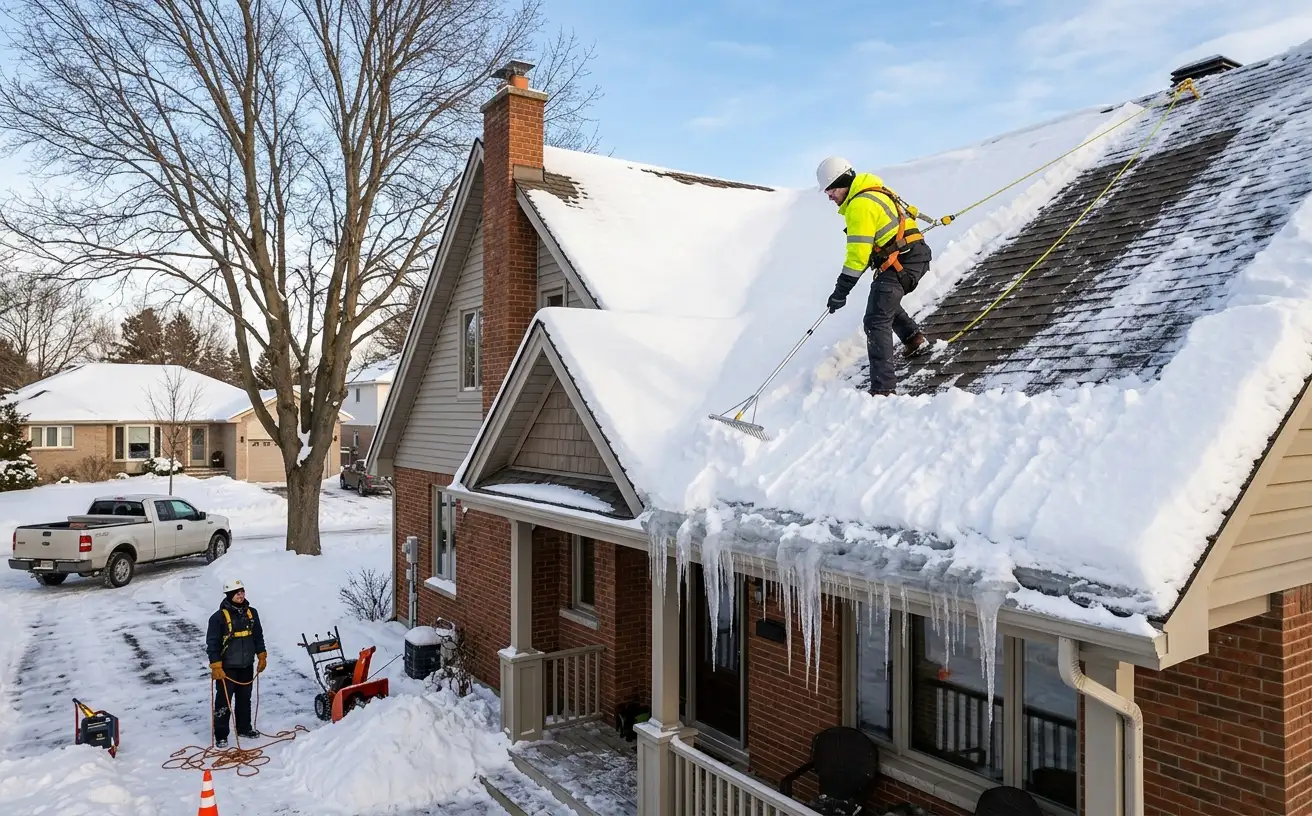
- Working from safe positions — using roof rakes and specialized tools from the ground where possible, or proper fall protection when roof access is necessary
- Removing snow in the right amount — reducing the load to a safe level while leaving a thin protective layer over the roofing material
- Clearing eaves and valleys — focusing on the areas where ice dams form and weight concentrates
- Careful ice management — removing ice dams without gouging or damaging the roof edge, sometimes using steam or careful mechanical methods rather than brute force
- Protecting the area below — keeping people and property clear of falling snow and ice
The goal is always to reduce risk to the structure and occupants while leaving the roof itself undamaged and ready to keep performing through the rest of the winter.
The Risks of DIY Snow Removal
Every winter, homeowners are injured or damage their roofs attempting to clear snow themselves. The most common problems:
Falls. Ladders on ice and snow, slippery roof surfaces, and hidden edges make DIY roof work extremely dangerous.
Roof damage. Metal shovels and aggressive scraping strip granules, gouge shingles, puncture membranes, and damage flashing — turning a snow problem into a leak problem.
Falling ice and snow. Dislodged snow and ice can injure the person doing the work or anyone nearby.
Electrical hazards. Metal roof rakes and tools near power lines or service entries create serious risk.
Incomplete or counterproductive removal. Removing snow incorrectly can concentrate load, worsen ice dams, or leave the real problem unaddressed.
For clearing snow safely from the ground with a roof rake — for the lower edge of the roof only — there is a limited role for careful homeowner action. But for significant snow load, ice dams, steep or high roofs, and any situation involving climbing, professional removal is by far the safer choice.
Flat and Low-Slope Roofs Need Extra Attention
Flat and low-slope roofs deserve particular attention in winter because they do not shed snow the way steep roofs do. Snow accumulates and stays, and the load builds through the season. Commercial buildings with large flat roofs are especially vulnerable, which is why commercial roof maintenance programs often include snow load monitoring and removal. If you own a commercial building or a home with flat roof sections, proactive snow management through winter is worth planning before the snow arrives.
Planning Ahead for Winter
The best time to think about snow removal is before winter, not during a crisis. A few proactive steps help:
- Have your roof and attic assessed in autumn — proper insulation and ventilation reduce ice dam risk. Our autumn maintenance checklist covers the full routine
- Address any existing ventilation or insulation deficiencies before the snow flies
- Know who to call for removal before you need them, so you are not scrambling during a storm
- For metal roofs, consider snow guards to manage snow release safely
- For flat and commercial roofs, plan a snow-monitoring approach for the season
Get Your Free Estimate
Concerned about snow load or ice dams this winter? Our team provides safe, professional roof snow and ice removal across the Ottawa Valley — and can assess whether an underlying insulation or ventilation issue is driving the problem.
Fill out the form or reach us directly.
Call us at (613) 259-5766 or contact us for snow and ice removal.
Protecting Your Roof Through Winter
Snow and ice are simply part of Ottawa Valley winters, and most of the time your roof handles them without help. But when the load builds, the ice dams form, and the warning signs appear, safe and timely removal protects both your roof and the people inside your home. Doing it professionally — with the right tools, techniques, and judgment — clears the danger without damaging the roof. McKay Roofing has kept Ottawa Valley roofs safe through winter for more than 50 years.