Chimney Rebuilding and Masonry Repair for Roof Longevity
A chimney is one of the hardest-working parts of any roof. It stands above the roofline, fully exposed to wind, rain, snow, and the relentless freeze-thaw cycles of Eastern Ontario winters. And unlike the roof around it, a masonry chimney is built from brick and mortar — materials that deteriorate over time in ways that directly threaten the surrounding roof. Understanding chimney masonry health is an essential part of protecting your roof's longevity.
This guide covers the masonry side of chimney care — freeze-thaw damage, spalling brick, failing mortar, crown and cap deterioration, and when a chimney needs repointing, partial rebuilding, or a full rebuild. This is distinct from chimney flashing, which is the metal waterproofing where the chimney meets the roof; for that side, see our guides on chimney flashing and chimney leaks. After more than 50 years of roofing work across the Ottawa Valley, we understand how chimney masonry and roof health are connected.
Why Chimney Masonry Matters to Your Roof
A deteriorating chimney is not just a chimney problem — it is a roof problem waiting to happen. As masonry fails, several things threaten the surrounding roof:
Falling debris. Loose or spalling brick and crumbling mortar fall onto the roof surface, where they can damage shingles, clog valleys, and accumulate in gutters.
Water intrusion. Failing masonry absorbs and channels water. A deteriorating chimney can allow water into the structure at the roofline, contributing to leaks that appear to be roof problems but originate in the chimney.
Flashing failure. Chimney flashing ties into the masonry. When the brick and mortar deteriorate, even well-installed flashing can lose its seal, because the surface it bonds to is failing.
Structural risk. A severely deteriorated chimney can lean, shift, or in extreme cases collapse — a serious hazard to the roof and to anyone below.
Keeping the chimney masonry sound is therefore part of keeping the roof sound. The two are connected, which is why a roofing contractor assesses the chimney as part of evaluating the roof.
Freeze-Thaw Damage in the Ottawa Valley
The single greatest enemy of chimney masonry in Eastern Ontario is the freeze-thaw cycle. Our winters subject chimneys to repeated cycles of freezing and thawing, and this process is remarkably destructive to brick and mortar.
Here is how it works: brick and mortar are porous and absorb water. When that absorbed water freezes, it expands. The expansion creates pressure inside the masonry. When it thaws, the water recedes, only to be absorbed and frozen again with the next cold snap. Over many cycles — and the Ottawa Valley delivers many each winter — this repeated expansion and contraction breaks down the masonry from within.
The results show up as spalling (brick surfaces flaking or popping off), cracking, and crumbling mortar joints. Freeze-thaw damage is progressive and accelerating: once the masonry surface is compromised, it absorbs more water, which means more freeze-thaw damage, which compromises it further. Catching and addressing the damage early is far less costly than letting it progress.
Signs of a Failing Chimney
Chimney masonry problems are often visible from the ground or during routine roof maintenance. Watch for:
- Spalling brick — surfaces flaking, pitting, or popping off, sometimes leaving brick fragments on the roof
- Crumbling or missing mortar between the bricks (failing mortar joints)
- White staining (efflorescence) on the brick — a sign of water moving through the masonry
- Cracks in the brick or mortar
- A leaning or visibly out-of-plumb chimney — a serious structural warning sign
- Damaged or missing chimney crown (the concrete cap at the top)
- Rust stains from a deteriorating chimney cap or damper
- Brick fragments or mortar debris in gutters or on the roof
- Interior signs — dampness or staining on walls or ceilings near the chimney
Any of these signs warrants a closer look. A leaning chimney in particular should be assessed promptly, as it represents both a structural and a safety concern.
Repointing: Renewing the Mortar Joints
When the brick is still sound but the mortar joints have deteriorated, repointing (also called tuckpointing) is the repair. Repointing involves removing the failing mortar from the joints to a certain depth and replacing it with fresh mortar.
Repointing is the most common chimney masonry repair and, when done in time, is the most cost-effective. It restores the structural integrity of the joints, stops water from penetrating through failing mortar, and extends the life of the chimney significantly. The key is timing — repointing while the brick is still sound is straightforward. Waiting until the brick itself has deteriorated turns a repointing job into a rebuilding job.
Good repointing also requires matching the new mortar to the old in composition and appearance, particularly on older or heritage homes. Improper mortar can actually accelerate damage to older brick, which is why experience matters.
Crown and Cap Repair
Two components at the top of the chimney are critical to keeping water out of the masonry, and both commonly fail.
The chimney crown is the concrete or mortar cap that covers the top of the chimney around the flue. Its job is to shed water away from the masonry below. Crowns crack and deteriorate over time — especially under freeze-thaw stress — and a cracked crown allows water directly into the top of the chimney structure, accelerating masonry damage from the top down. Crown repair or replacement is a key part of protecting the chimney.
The chimney cap is the metal cover over the flue opening. It keeps rain, snow, animals, and debris out of the flue. A missing or damaged cap allows water directly into the chimney interior. Installing or replacing a cap is a relatively inexpensive measure that prevents significant water-related damage.
Both the crown and cap are frontline defences against water entering the masonry. Keeping them intact dramatically slows the freeze-thaw deterioration of the whole chimney.
Partial Rebuilding
When deterioration has progressed beyond what repointing can address — when the brick itself is spalling and failing, particularly in the most exposed upper portion of the chimney — partial rebuilding becomes necessary.
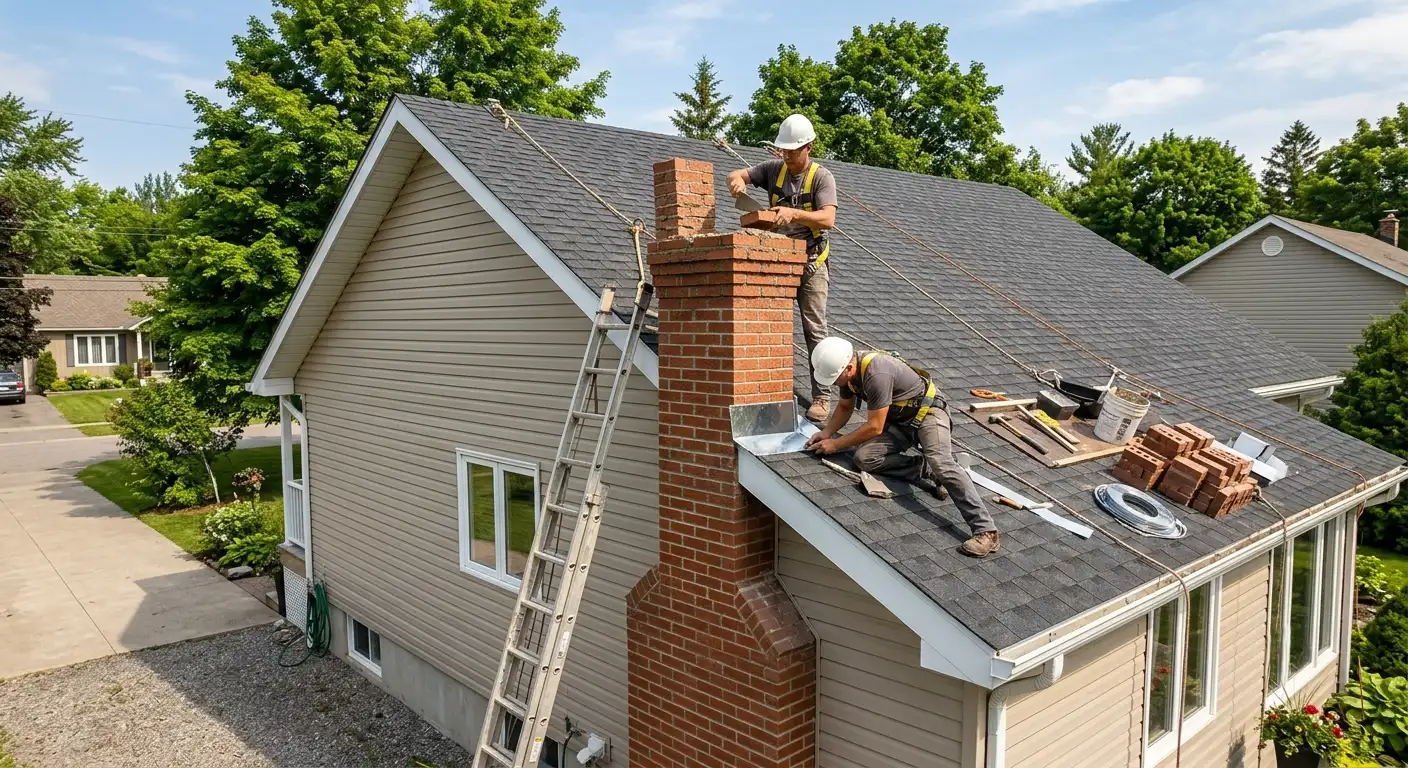
Partial rebuilding, often called a rebuild "above the roofline," involves dismantling the deteriorated upper section of the chimney and rebuilding it with new brick and mortar. Because the portion of the chimney above the roof is the most exposed to weather and freeze-thaw, it is frequently the part that fails first while the protected portion below the roofline remains sound.
Partial rebuilding restores the chimney to sound condition at a lower cost than a full rebuild, and it is a common solution for Ottawa Valley chimneys where decades of freeze-thaw have taken their toll on the exposed brick. It is also the ideal time to install new flashing and a new crown and cap, so the rebuilt chimney starts fresh in every respect.
Full Rebuilding
In the most severe cases — when deterioration extends well below the roofline, when the chimney is leaning or structurally compromised, or when the masonry has failed throughout — a full rebuild is the answer.
A full rebuild removes the chimney to a sound base and rebuilds it entirely. It is the most extensive and costly chimney repair, but for a chimney that is beyond partial measures, it is the only path to a safe, durable result. A full rebuild also provides the opportunity to address every element at once: the masonry, the crown, the cap, the flashing, and the integration with the surrounding roof.
For some homeowners with a severely deteriorated chimney that is no longer used — for example, a chimney that served a since-replaced heating system — removal rather than rebuilding is sometimes the practical choice. This is a decision worth discussing with a professional based on the specific situation.
Coordinating Chimney Work With Roofing
Chimney masonry work and roofing work are closely connected, and coordinating them produces the best results. Several situations make combined work especially sensible:
During a re-roof. If you are replacing the roof and the chimney needs masonry attention, doing both together is ideal. The roof access is already established, and the new flashing can be integrated with freshly repaired masonry for the tightest possible seal. Addressing a deteriorating chimney during a re-roof prevents the frustration of a masonry problem undermining a brand-new roof.
When flashing repairs keep failing. If chimney flashing has been repaired repeatedly but leaks persist, the underlying masonry is often the real problem. Sound flashing cannot bond to failing brick and mortar. Addressing the masonry is what actually solves the leak.
When roof debris points to the chimney. Brick fragments and mortar debris found during roof maintenance or after a storm inspection indicate active masonry deterioration that should be assessed.
Because the chimney and roof interact so directly, a roofing contractor who understands both is well positioned to address the whole system rather than treating the symptoms in isolation.
Why This Work Requires Experience
Chimney masonry work combines masonry skill, roofing knowledge, and safe work at height. Matching mortar correctly, executing repointing that lasts, rebuilding to proper structural standards, integrating flashing with masonry, and doing it all safely on a roof demands genuine experience.
This is not a project for inexperienced hands. Poor masonry work fails quickly under Ottawa Valley freeze-thaw conditions, and poorly integrated flashing leaks. Working with an established local roofing contractor who understands both the masonry and the roof — and who knows how our specific climate stresses a chimney — is the difference between a repair that lasts decades and one that fails within a few winters. Chimney condition is also a natural thing to evaluate during a professional roof inspection.
Get Your Free Estimate
Noticing spalling brick, crumbling mortar, or a deteriorating chimney crown? Our team will assess the masonry and the surrounding roof together and recommend the right repair — from repointing to rebuilding. No obligation.
Fill out the form or reach us directly.
Call us at (613) 259-5766 or contact us to schedule your on-site assessment.
Protecting the Roof by Protecting the Chimney
A sound chimney protects the roof around it; a failing one threatens it. In the Ottawa Valley's demanding freeze-thaw climate, chimney masonry deteriorates steadily, and catching the damage early — with repointing, crown and cap repair, or partial rebuilding before it becomes a full rebuild — is far less costly than waiting. Whether your chimney needs a modest repair or a complete rebuild, addressing it protects both the chimney and the roof it rises through. McKay Roofing has been keeping Ottawa Valley chimneys and roofs sound for more than 50 years.