
Understanding Roof Flashing: Your Roof's First Line of Defence
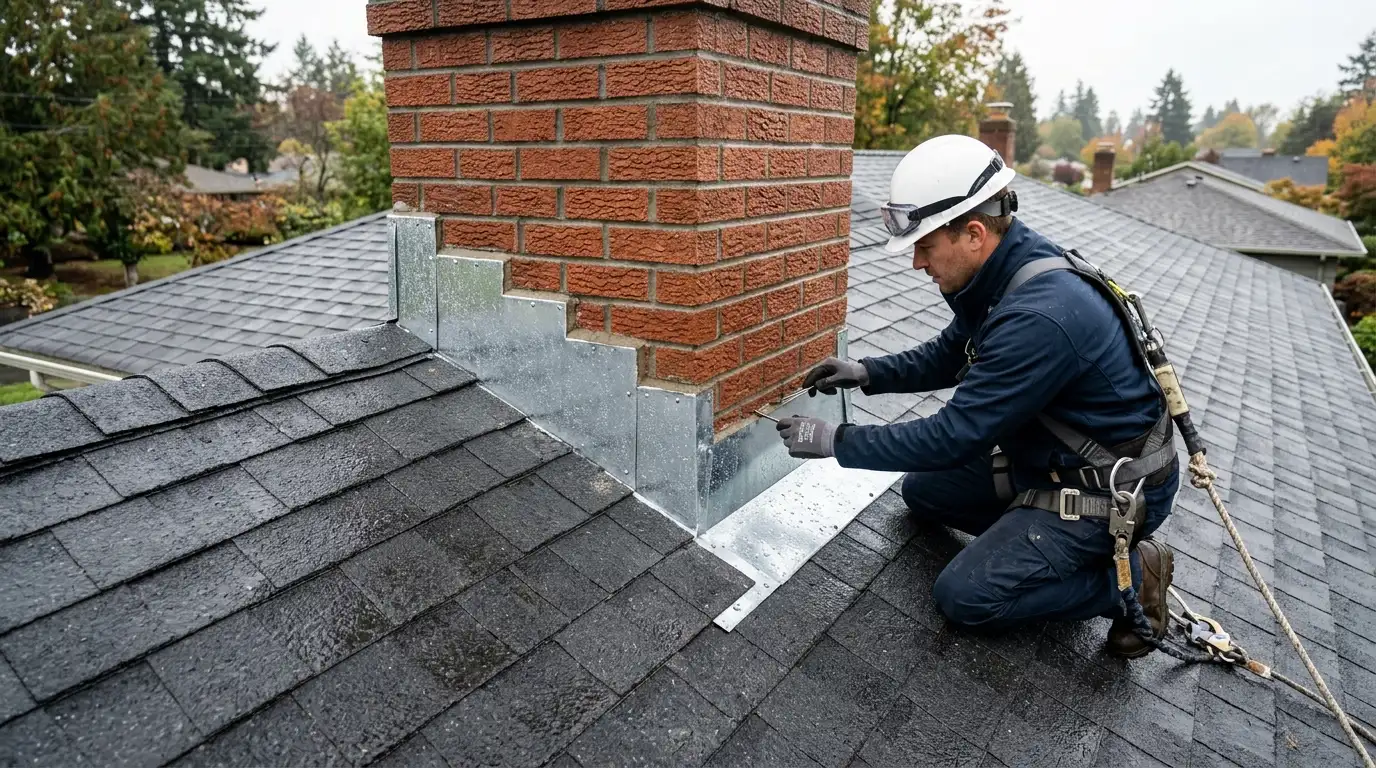
Most homeowners think the shingles or panels are what keep water out of their home. In reality, the hardest-working and most failure-prone part of any roof is the flashing: the metal that seals the joints, edges, and penetrations where the roofing surface is interrupted. Flashing is your roof's first line of defence against leaks, and understanding what it is and why it matters helps you protect your home from the water intrusion that flashing failures cause.
At McKay Sheet Metal & Roofing, flashing is central to what we do. We have been fabricating and installing custom metal since 1973, with our own in-house sheet metal shop. This guide explains what roof flashing is, where it goes, the main types, the warning signs of flashing failure, and why quality sheet metal work makes such a difference.
What Is Roof Flashing?
Roof flashing is thin metal material installed to direct water away from the areas of a roof where leaks are most likely to occur. Wherever the continuous surface of a roof is interrupted, by a chimney, a wall, a valley, a vent, or the edge of the roof, there is a joint that water can exploit. Flashing seals those joints, channelling water back onto the roof surface and away from the vulnerable seam.
Flashing works on a simple but critical principle: it creates overlapping layers that guide water downward and outward using gravity, so that water is always directed over the top of the next layer rather than being allowed to seep behind it. When flashing is installed correctly, those overlaps form a continuous, watertight system. When it is installed poorly, water finds the gap.
Why Flashing Prevents Most Leaks
Here is the fact that surprises most homeowners: the large majority of roof leaks do not happen in the open field of the roof. They happen at the penetrations and joints, which means they happen at the flashing. Chimneys, skylights, vents, and wall intersections are where water gets in, and flashing is what is supposed to stop it.
This is why flashing quality matters so much more than its small size suggests. A roof can have perfect shingles and still leak badly if the flashing around the chimney was done poorly. Our pages on roof flashing leaks and chimney leaks cover how often improper flashing is the real source of a leak that seems to come from somewhere else.
The Main Types of Roof Flashing
Different parts of the roof call for different flashing, and a complete roof uses several types working together.
Step flashing is used where a roof meets a vertical wall, such as along the side of a dormer. It consists of individual pieces layered with each course of shingles, stepping up the wall so every piece overlaps the one below.
Chimney flashing seals the joint around a chimney, typically combining base flashing, step flashing up the sides, and counter-flashing set into the masonry. Chimney flashing is some of the most detailed and failure-prone work on a roof. Our chimney flashing page covers how it ties into different chimney exteriors, and our guide on chimney rebuilding and masonry repair covers the masonry side that flashing bonds to.
Valley flashing lines the valleys where two roof slopes meet, channelling the large volume of water that flows through these areas.
Vent and penetration flashing seals around plumbing vents, exhaust vents, and other roof penetrations. Each penetration needs proper flashing to stay watertight.
Drip edge runs along the eaves and rakes, directing water into the eavestrough and away from the fascia and roof edge.
Skylight flashing seals around skylights, which are among the most leak-prone penetrations when flashed poorly. Our skylight installation guide covers how proper flashing keeps skylights watertight.
Signs of Flashing Failure
Flashing problems often reveal themselves as leaks that appear some distance from the actual source, which makes them tricky to diagnose. Watch for:
- Water stains on ceilings or walls, particularly near chimneys, skylights, or where walls meet the roof
- Visible rust, cracks, or gaps in the metal flashing when viewed from outside
- Flashing that has lifted, bent, or pulled away from the surface it seals
- Missing or deteriorated sealant at flashing joints
- Loose or missing flashing pieces, sometimes after a windstorm
- Damaged counter-flashing where it meets chimney masonry
Because flashing failures cause leaks that worsen over time and can damage the roof deck and interior, addressing them promptly is important. If you have an active leak, our emergency roof leak repair team can help, and our roof repair services address flashing issues directly.
Why Custom Sheet Metal Work Matters
Here is where the quality of your roofer makes a real difference. Flashing is sheet metal work, and not every roofing contractor fabricates their own. McKay Sheet Metal & Roofing has operated its own in-house sheet metal shop since 1973. We fabricate custom metal components to suit the specific details of each roof, rather than relying only on generic, pre-formed pieces that may not fit the situation properly.
This matters because roofs are not uniform. Chimneys come in different sizes and exteriors, walls meet roofs at different angles, and older homes in particular have details that off-the-shelf flashing was never designed for. The ability to form custom flashing to the exact requirements of a roof produces a tighter, longer-lasting seal. The same in-house capability lets us fabricate other custom metal components, such as the shop-formed ice guards we make from 26-gauge metal to match the colour and material of a customer's roof.
When flashing is custom-formed to fit and installed by people who understand how water moves across a roof, it does its job for decades. When it is improvised or forced to fit, it becomes the leak waiting to happen.
Flashing and Your Whole Roof System
Flashing does not work in isolation. It is one part of a complete roofing system that includes the roofing material, underlayment, ice and water shield, ventilation, and the flashing that ties it all together at the vulnerable points. A quality installation treats all of these as an integrated whole. This system approach is part of what proper installation, and certifications like GAF Master Elite, are built around. Flashing is also why the ice and water membrane is installed in valleys and around penetrations, giving a critical second layer of protection exactly where flashing does its work.
Get Your Free Estimate
Noticing a leak near a chimney, skylight, or wall, or want flashing assessed as part of your roof? With our own in-house sheet metal shop, we fabricate and install custom flashing to protect your home. Contact us for a no-obligation assessment.
Fill out the form or reach us directly.
Call us at (613) 259-5766 or contact us to schedule your on-site assessment.
Small Metal, Big Job
Roof flashing is small, often overlooked, and absolutely essential. It is the first line of defence against the leaks that cause the most roofing damage, and its quality depends entirely on skilled fabrication and careful installation. For homeowners across the Ottawa Valley, understanding flashing is understanding where roofs actually succeed or fail. McKay Sheet Metal & Roofing has been fabricating and installing quality flashing from our own sheet metal shop since 1973, and we would be glad to make sure your roof's first line of defence is doing its job.