
Eavestrough and Roof Integration: How Gutters Protect Your Roof's Lifespan
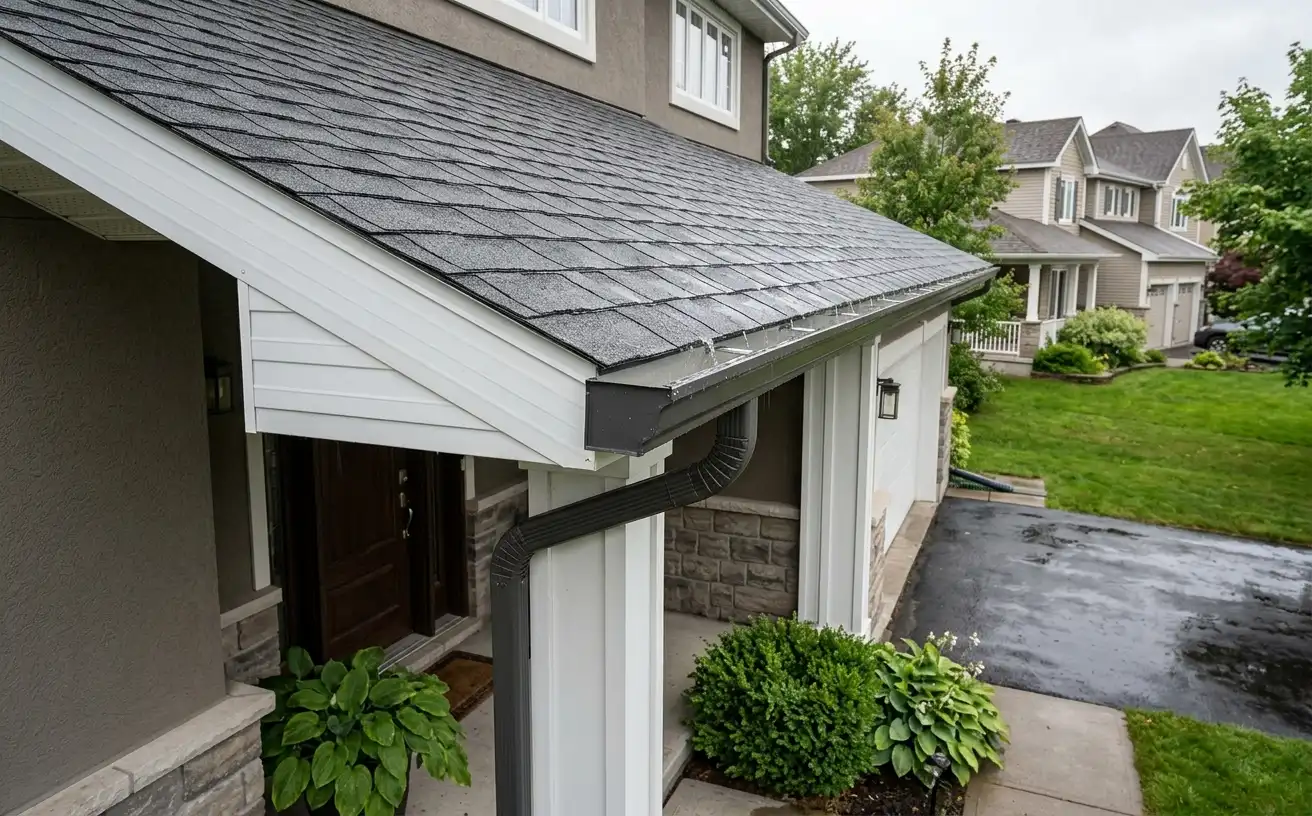
Most Ontario homeowners think of their roof and their gutters as two separate things. In practice, they are a single water-management system, and problems with either component quickly become problems with the other. A failing eavestrough will shorten the life of a brand-new roof, and a poorly draining roof will overwhelm even a top-tier gutter system. Understanding how eavestrough installation and roofing work together helps you protect your investment and avoid expensive water damage down the road.
After more than 50 years installing both roofing and gutter systems across the Ottawa Valley, we know how often the two get treated as separate projects — and how much easier things go when they are handled together. This guide covers what eavestroughs actually do for your roof, how failing gutters cause roof damage, and what to look for when it comes time to repair or replace either system.
What Eavestroughs Actually Do
Eavestroughs collect water shed from the roof and direct it away from the building foundation through downspouts. On a typical Ontario home, the roof drains hundreds of litres of water during a single significant rainfall, and the eavestrough is what keeps that water from cascading down the side of the house, pooling around the foundation, or running behind the fascia and soffit.
When gutters work correctly, they do three things at once: they protect the fascia and soffit from constant water exposure, they keep the foundation dry, and they prevent the erosion of soil and landscaping around the perimeter of the home. When they fail, all three of those protections collapse together.
How Failing Gutters Damage Your Roof
A gutter failure looks like a minor problem — a sagging section, an overflow during heavy rain, a downspout that has come loose. The reality is more serious, because the water that should be flowing through the gutter finds somewhere else to go.
Fascia and Soffit Rot
Water that overflows or backs up behind a gutter runs down the fascia board. Wooden fascia rots quickly under repeated exposure, and once rot sets in, the fascia can no longer hold the gutter securely. The gutter sags further, more water backs up, and the cycle accelerates. Left long enough, the rot spreads to the soffit and into the roof deck itself.
Ice Dam Formation
Gutters clogged with debris or blocked by ice cannot drain properly during winter thaws. Water backs up under the shingles at the eaves, refreezes, and forms the ice dams that cause interior leaks and roof damage across Lanark County every winter. Our overview of ice dam prevention covers the mechanics in more detail, and our ice dam repair services address the resulting damage.
Foundation and Basement Issues
Water dumped at the base of a wall instead of directed away by the gutter and downspout ends up in the soil against the foundation. Over years, this leads to foundation settling, basement leaks, and expensive structural repairs — problems that started with a gutter, not the roof.
Roof Edge and Drip Edge Damage
When gutters are missing, damaged, or improperly sloped, water runs directly down the fascia and behind the drip edge. This compromises the seal at one of the most vulnerable points on any roof — the transition between roof and wall — and eventually leads to interior leaks and damaged decking.
Signs Your Eavestroughs Need Attention
Gutter problems rarely announce themselves dramatically. Look for these signs during your annual roof check or when you are already outside doing yard work:
- Sagging or pulling away from the fascia — a clear structural issue, often driven by underlying rot
- Overflow during moderate rain — usually indicates a clog, undersizing, or improper slope
- Water stains on the fascia or soffit — evidence of backed-up water finding its way into wood
- Peeling paint or dark streaks on siding — water is running down the wall instead of through the downspout
- Erosion or pooling near the foundation — downspouts are failing to move water far enough away
- Detached or damaged downspout sections — connection points working loose over time
- Granule accumulation in the gutter — normal in small amounts, excessive amounts can indicate aging shingles as covered in our warning signs guide
Any one of these signs deserves a closer look. Two or more usually means the system needs meaningful repair or replacement.
Sizing and Materials
Not all eavestroughs are the same, and choosing the right size and material matters more than most homeowners realize.
Size
Standard residential eavestroughs come in 5-inch and 6-inch profiles. Five-inch is the default on most Ontario homes and works fine for average roof areas. Six-inch is appropriate for homes with large roof surfaces, steeper pitches that shed water faster, or areas with heavy rainfall. Undersized gutters overflow even when working correctly.
Downspout sizing matters just as much. A 5-inch gutter with 2×3-inch downspouts often struggles during heavy rain; upgrading to 3×4-inch downspouts significantly increases capacity without changing the visible gutter.
Materials
Aluminum is the most common choice — lightweight, rust-resistant, available in seamless form, and offered in a wide range of colours. Aluminum eavestroughs typically last 20 to 30 years with routine maintenance and are the default recommendation for most residential installations.
Steel gutters are more durable and better suited to areas with heavy ice loads or occasional impact from tree branches. They cost more than aluminum and require more attention to prevent corrosion, but they hold up better in demanding conditions.
Copper is the premium option — long-lasting, beautiful, and expensive. Rare in residential applications outside of high-end heritage restorations.
Vinyl is the entry-level option and generally not recommended for Ontario climates. Vinyl becomes brittle in cold temperatures and cracks under ice load.
Profile
K-style gutters (the flat-front profile most homeowners recognize) are the North American standard and offer the best capacity for their size. Half-round gutters look more traditional and suit heritage-style homes but hold less water than K-style at the same width.
Gutter Guards: Are They Worth It?
Gutter guards — screens, mesh, or covers installed over the top of the gutter — reduce debris buildup and the frequency of cleaning required. Whether they are worth installing depends on your specific situation.
Guards make the most sense for homes surrounded by mature trees, especially those that drop small debris like maple keys, pine needles, or seed pods that clog gutters quickly. They also help homeowners who cannot safely access their gutters for cleaning.
Guards do not eliminate maintenance entirely. Even the best systems require periodic clearing, especially in autumn. Fine debris still accumulates, and heavy snow can bend or dislodge poorly installed guards. When considering guards, focus on the quality of the product and the installation rather than the marketing promise of "never clean your gutters again."
For homes without significant tree coverage, guards are often unnecessary and add cost without meaningful benefit.
Repair vs. Replacement
Not every gutter problem needs full replacement. A single sagging section can often be re-secured, a leaking joint can be resealed, and a detached downspout can be reattached. Isolated damage is usually a repair situation.
Replacement makes sense when:
- Multiple sections show sagging, corrosion, or damage
- The system is undersized for the roof area and overflows repeatedly
- Fascia damage has compromised the mounting surface
- The gutters are 20+ years old and showing multiple end-of-life signs
- You are already replacing the roof and want a matched, integrated installation
For a broader framework on when to fix versus replace roofing-related components, our guide on roof repairs covers the general logic.
Why Gutter Work Belongs in Your Roofing Project
Bundling eavestrough replacement with a roof replacement is almost always the smarter path when both systems are aging. Several practical reasons:
Access is already set up. Ladders, scaffolding, and safety equipment are already in place. Doing the gutter work as a separate project later means paying for that setup twice.
The drip edge and fascia can be properly integrated. Installing new gutters against a new roof with new drip edge and new fascia produces a cleaner, tighter integration than retrofitting one component to an aging installation.
Warranty coverage aligns. Both systems start their lifespan at the same time, and future repair calls fall under one contractor rather than two.
Aesthetic match. Colours and profiles can be coordinated so the whole roof-and-gutter package looks intentional rather than accumulated over decades.
The cost of bundling is almost always less than doing the two projects separately. For a broader breakdown of what shapes the total quote, see our guide on what affects the cost of a new roof in Ontario.
Seasonal Maintenance Basics
Once installed, eavestroughs need periodic attention to keep working. The two most important intervals are:
Autumn: Clear leaves and debris after the trees have finished dropping. This is the single most important cleaning of the year — it prevents winter ice dam formation and spring thaw overflow. Our autumn roof maintenance checklist walks through the full routine.
Spring: Clear anything the winter deposited and check for damage caused by ice loads. Our spring roof preparation guide covers the wider spring inspection.
Between these two intervals, watch for overflow during heavy rain events. Persistent overflow indicates a clog or damage that needs addressing before the next season.
Other Roof Issues That Point to Gutter Problems
Some roofing symptoms actually originate in the gutter system. Recognizing this can save homeowners from misdiagnosing the problem:
Dark streaks on siding. Often blamed on the roof but usually the result of overflowing gutters running down the wall. See our overview of dark streaks and discoloration for related causes.
Sudden interior leaks near exterior walls. Water backing up behind failed gutters can enter the wall cavity. Our emergency leak repair services address the immediate damage, but fixing the underlying gutter is what prevents it from happening again.
Persistent moisture in the attic. Water finding its way in at the roof edge can appear as attic dampness. Proper attic ventilation and drainage together prevent moisture accumulation.
Weatherproofing failures. If your home is showing more water-related problems than it should, an integrated look at the roof and gutter system usually surfaces the real cause. Our guide on weatherproofing your roof covers the wider approach.
After a Major Storm
Severe weather is hard on both the roof and the gutter system. High winds can bend or detach downspouts, hail can dent gutters, and falling branches can crush entire sections. When inspecting after a storm — see our post-storm inspection guide for the full checklist — include the gutters in your assessment. Damaged gutters left unaddressed compound quickly during the next rain event.
Get Your Free Estimate
Whether you need a full eavestrough replacement, gutter guards installed, or gutters bundled into a larger roofing project, our team will walk your home and give you a straightforward assessment with no obligation.
Fill out the form or reach us directly.
Call us at (613) 259-5766 or contact us to schedule your on-site assessment.
Getting It Right the First Time
The best eavestrough is the one you never think about — it drains, it protects, it does its job for decades without demanding attention. Getting there requires proper sizing, quality materials, careful installation, and integration with the roof it serves. For Lanark, Perth, Carleton Place, Almonte, Kanata, and the wider Ottawa Valley, McKay Roofing has been handling both roofing and eavestrough work as a single integrated service for more than 50 years. When both systems are done together and done well, they protect your home for decades to come.