What Affects the Cost of a New Roof in Ontario? A Homeowner's Guide to Roofing Estimates
One of the first questions every Ontario homeowner asks when planning a roof replacement is: how much will this cost? It is a fair question, but it is also one that no honest roofing contractor can answer over the phone without seeing the roof. The cost of a new roof in Ontario depends on a long list of factors that are unique to your home, your property, and the work involved.
This guide walks through the main factors that shape your roofing estimate so you understand what goes into the final number — and why two homes on the same street can receive very different quotes for what looks like the same job. After over 50 years of providing roofing estimates across the Ottawa Valley, we know which variables matter most.
1. The Size and Shape of Your Roof
The most obvious cost factor is how much roof there is. Roofing is generally measured in "squares," with one square equal to 100 square feet of roof surface. Larger roofs require more material, more labour, and more time.
But raw size is only part of the picture. Roof shape matters just as much. A simple gable roof with two flat planes costs less per square than a complex roof with multiple intersecting hips, valleys, dormers, and gables — even if the total square footage is identical. Complex rooflines require more cutting, more flashing detail work, and more time around every corner.
Steeper roof pitches also add to the cost. Anything above an 8:12 pitch requires additional safety equipment, slower work, and sometimes specialized harness anchor systems. Walkable roofs cost less to install than steep ones.
2. The Roofing Material You Choose
Material choice is the single largest variable in roofing cost. Each option has its own price range, expected lifespan, and warranty structure.
Asphalt shingles are the most popular choice for Ontario homes because they offer a strong balance of upfront cost, durability, and aesthetic options. Within the asphalt category, basic three-tab shingles cost less than architectural shingles, and premium designer shingles cost more again. Our asphalt shingles guide covers the differences in more detail.
Metal and steel roofing costs more upfront than asphalt but lasts significantly longer — often 40 to 50 years or more. For homeowners considering residential steel roofing, the higher initial investment is offset by extended lifespan and lower lifetime cost. See our breakdown of why homeowners should consider a metal roof for more on the trade-offs.
Flat roofing systems — modified bitumen, TPO, EPDM — have their own pricing logic that depends on system type, membrane thickness, and whether the project is residential or commercial in scale. Our flat roofing overview explains the main options.
Within each material category, premium product tiers cost more than entry-level options, but they often unlock stronger manufacturer warranties — which can be the deciding factor for long-term value.
3. Tear-Off and Disposal
Removing your existing roof is part of most replacements, and the volume of material being removed affects the price. A single layer of old asphalt shingles is straightforward. Two or three layers of old roofing — common on older Ontario homes — significantly increases tear-off time, disposal bin size, and dump fees.
Some homeowners ask whether they can save money by skipping tear-off and installing new shingles directly on top of the existing roof. We cover the trade-offs in our guide on installing a new roof over your old shingle roof. The short version: it is sometimes possible, but rarely advisable when long-term performance is the goal.
4. The Condition of Your Roof Deck
Underneath the visible shingles or panels is the plywood or board roof deck. Until the old roofing is removed, no contractor can see the actual condition of the deck. Damaged or rotted sections need to be replaced before new roofing goes on, and this is one of the most common reasons a final invoice differs from the original estimate.
Reputable contractors handle this transparently — you see the damage, you understand the repair, and you approve the cost before work continues. We never replace decking without your sign-off. The condition of the deck is also an important reason why a professional roof inspection is valuable even when the roof appears fine from the outside.
5. Underlayment, Ice and Water Shield, and Ventilation
What goes under the shingles matters as much as the shingles themselves, especially in Ontario's climate. Several layers and systems affect both performance and cost:
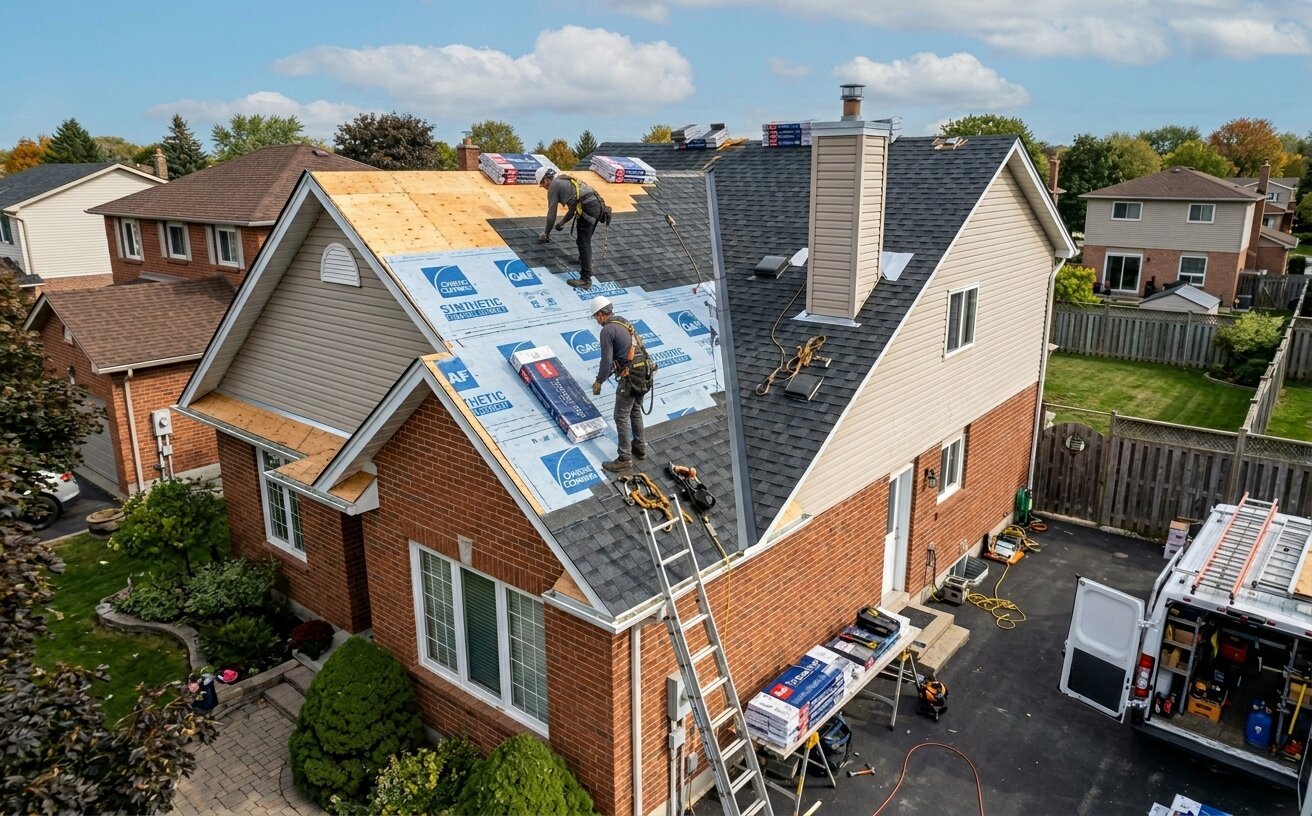
- Underlayment — synthetic underlayments cost more than basic felt but provide better protection and durability
- Ice and water shield — required along eaves, in valleys, and around penetrations to protect against ice dams. Coverage area affects cost
- Ventilation upgrades — proper attic ventilation extends roof life and prevents winter problems. Upgrading inadequate venting during a roof replacement is far easier and cheaper than retrofitting later
- Drip edge and starter strip — small details that add a small but real line item to the project
Cutting corners on these underlying components is one of the most common ways unscrupulous contractors lower their bid. The roof looks the same on day one, but the difference shows up in year five or ten.
6. Flashing and Penetrations
Every chimney, plumbing vent, skylight, sidewall, and roof penetration requires new flashing during a re-roof. Homes with several penetrations cost more than homes with few. Chimney flashing in particular is detailed work — a properly installed chimney saddle and counter-flashing system takes time and skill that show up in the estimate.
Skylights add cost too. If your home has skylights and they are aging, replacing them during the re-roof is far more economical than doing it as a separate project later. If you are considering adding skylights, our overview of how skylights can benefit your home walks through the considerations.
7. Accessibility and Site Conditions
How easily the crew can access the roof affects labour cost. Two-storey homes cost more than bungalows. Properties with limited driveway access, tight setbacks, or landscaping that needs protection take longer to set up and clean up.
Material staging logistics also matter. If shingle bundles cannot be lifted directly onto the roof from a delivery truck, the additional handling adds time to the project. For most Lanark County and Ottawa Valley homes accessibility is straightforward, but unusual sites can add a meaningful amount to a quote.
8. Warranty Tier and Contractor Certifications
The warranty backing your roof is part of the value you pay for. Premium manufacturer warranties — like the GAF Golden Pledge — can only be registered by certified contractors and provide much stronger protection than standard product warranties. Our guide on understanding roof warranties in Ontario explains how these tiers compare.
Quotes from certified contractors may be higher than bids from non-certified installers using the same shingles, because the warranty being delivered is different. This is a real cost difference, not a markup — the certified contractor is delivering more protection in writing.
9. Season and Lead Time
Roofing demand in Ontario peaks in late spring through fall. During peak season, lead times stretch and pricing reflects the demand. Winter and shoulder-season projects sometimes offer scheduling flexibility, though winter roofing has its own weather-dependent considerations.
Emergency work — a sudden leak, storm damage, or urgent roof leak repair — is priced differently than planned replacement because of crew availability and the rapid response involved.
10. Additional Upgrades and Features
Optional add-ons can shape the final number. Common upgrades that show up in Ottawa Valley quotes include:
- Snow guards for metal roofs, especially in Lanark County's heavy snow zones
- Upgraded ridge venting or additional roof vents for better attic airflow
- Heated cable systems along eaves for ice dam-prone areas
- Eavestrough replacement bundled into the roofing project
- Premium colour or designer shingle upgrades
None of these are required, but each one represents a choice that affects the final cost.
Why an On-Site Estimate Is the Only Accurate Number
Looking at all of the factors above, you can see why phone quotes and online "roof cost calculators" produce numbers that are usually wrong. A meaningful estimate requires someone to measure the roof, look at the deck condition (where visible), assess the flashing details, evaluate ventilation, and discuss the material and warranty options with you.
That is exactly what our on-site assessment delivers — a written, detailed quotation that lists every component, every material, and every line item, so you understand what you are paying for and can compare confidently against any other bid.
Get Your Free Estimate
The only way to know what your specific roof will cost is to have one of our estimators look at it. There is no charge and no obligation.
Fill out the form or reach us directly.
Call us at (613) 259-5766 or contact us to schedule your on-site assessment.
Getting the Best Value, Not Just the Lowest Price
When you receive multiple estimates, the lowest number is rarely the best value. A complete roofing estimate accounts for materials, labour, underlayment, flashing, ventilation, cleanup, and warranty — and a missing line item almost always reappears as a change order later. Our guide on how to choose a roofing contractor covers the questions worth asking before signing.
Ontario homeowners get the best value by comparing detailed, complete quotes from established contractors with strong warranty backing — not by chasing the lowest headline number. A roof that is properly installed, properly ventilated, and properly warrantied is one of the smartest investments you can make in your home.