New Construction Roofing: Choosing the Right System for Your Build
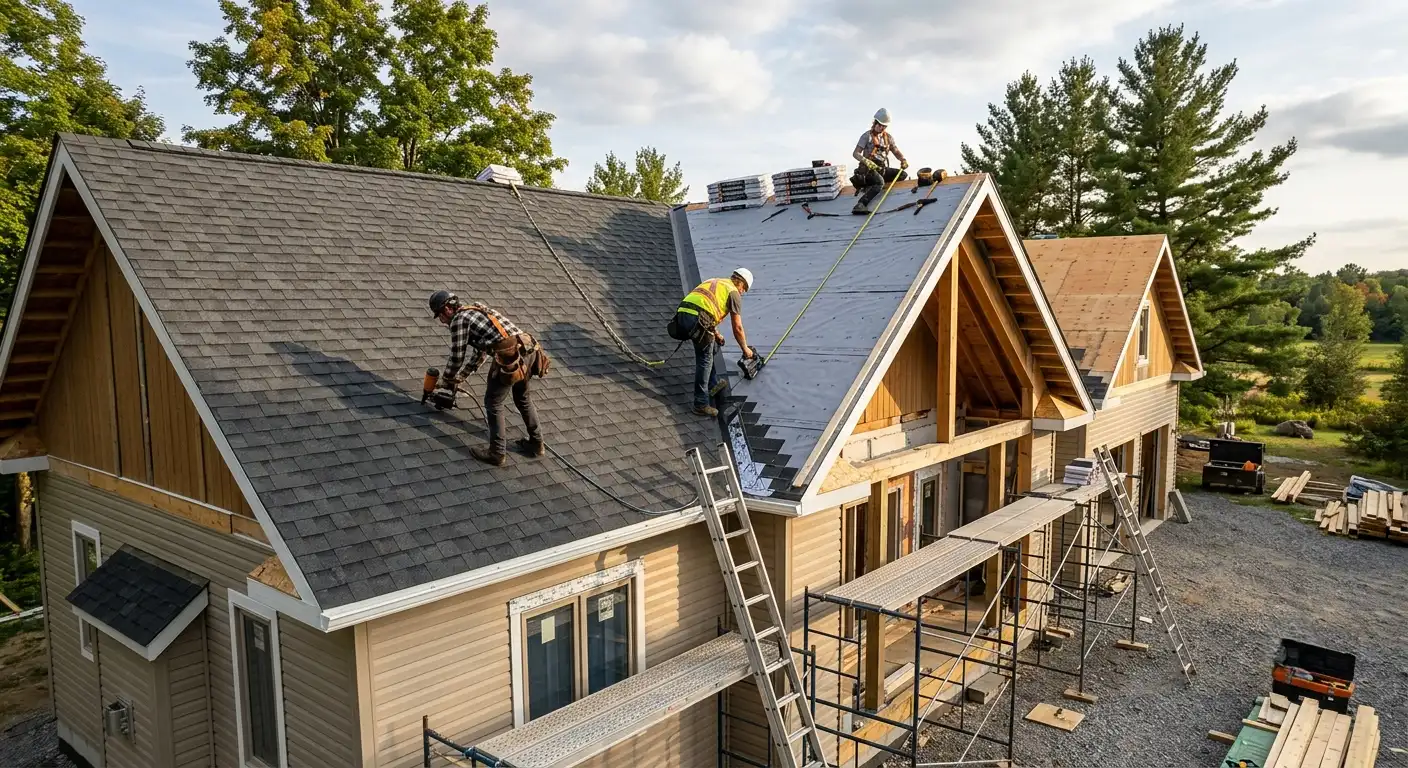
Building a new home or addition gives you something a roof replacement never can: the chance to get the roof right from the very beginning. Instead of working within the constraints of an existing structure, new construction lets you choose the ideal material, design the roof for performance, and build in ventilation and insulation from the ground up. The decisions you make at the design stage will shape how your roof performs for the next several decades.
This guide covers roofing decisions specific to new construction in the Ottawa Valley — how they differ from replacement, how to choose the right system, and how to coordinate roofing with the rest of your build. After more than 50 years roofing across Lanark, Perth, Almonte, Carleton Place, and the wider Ottawa Valley, we have worked on countless new builds and know how much easier things go when roofing is planned thoughtfully from the start.
Why New Construction Roofing Decisions Differ
Roofing a new build is fundamentally different from replacing a roof on an existing home. In a replacement, you work within what is already there — the existing roof pitch, the existing structure, the existing ventilation approach. In new construction, all of those are still on the drawing board, which means you can optimize every element instead of working around constraints.
This freedom is an opportunity, but it also means more decisions to make and more chances to get something wrong if the roofing is treated as an afterthought. The homeowners and builders who get the best results are the ones who think about the roof early — while the design is still flexible — rather than treating it as a finishing detail at the end.
Choosing the Material at the Design Stage
Material choice is the biggest roofing decision in any new build, and making it early influences the rest of the design. The main residential options each bring different considerations to a new construction project.
Asphalt shingles remain the most common choice for new homes — cost-effective, versatile, available in many colours and styles, and suited to most architectural designs. For many new builds, quality architectural shingles offer the best balance of cost and performance.
Metal roofing is an increasingly popular choice for new construction, particularly for homeowners planning to stay long-term. Choosing metal at the design stage lets the structure and roof lines be optimized for the material, and the 40-to-50-year lifespan means the roof may never need replacing. Our comparison of asphalt shingles vs. metal roofing covers the trade-offs in detail, and if you lean toward metal, our guide on standing seam vs. ribbed steel helps choose the profile.
Flat roofing systems come into play for modern architectural designs, additions, or homes with flat or low-slope sections. These require specialized systems and design consideration from the start.
Choosing the material early matters because it influences roof pitch, structural requirements, and the overall aesthetic of the home. A metal roof and an asphalt roof may call for different design decisions, so knowing your material before the design is finalized produces a more cohesive result.
Designing the Roof for Performance
New construction lets you design the roof itself — not just choose what covers it. Several design factors affect how well the roof will perform over its lifetime.
Roof pitch. The slope of the roof affects water shedding, snow load management, material options, and aesthetics. Steeper roofs shed snow and water more readily — a real advantage in the Ottawa Valley's snowy winters — while lower slopes have their own applications. The pitch should suit both the chosen material and the climate.
Roof complexity. Every valley, hip, dormer, and intersecting roofline adds visual interest but also adds potential leak points and cost. A simpler roofline is easier to waterproof and maintain; a complex one demands more careful detailing. Designing with awareness of this trade-off produces a roof that is both attractive and durable.
Overhangs and eaves. Generous eave overhangs protect the walls and foundation from water and provide room for proper soffit ventilation. Designing adequate overhangs into the build supports both the roof and the whole building envelope.
Future maintenance access. Thinking about how the roof will be accessed for future maintenance — and where features like chimneys and vents are placed — pays off for decades. Placing penetrations thoughtfully reduces future leak risk.
Building In Ventilation and Insulation From the Start
One of the greatest advantages of new construction is the ability to design the attic ventilation and insulation as an integrated system from day one — rather than retrofitting it later, as so many older homes require.
In a new build, the ventilation can be designed with balanced intake and exhaust, proper soffit venting, ridge venting, and the baffles that keep insulation from blocking airflow. The insulation can be installed to modern R-values appropriate for Eastern Ontario without the compromises that come with retrofitting an existing attic. Our guide on attic insulation and your roof explains why this insulation-ventilation partnership is so important, and our attic ventilation service covers the airflow requirements.
Getting this right from the start means the new roof begins its life with the ideal conditions beneath it: a cold, dry, well-ventilated attic that prevents ice dams, controls moisture, and lets the roof reach its full lifespan. This is far harder and more expensive to achieve as a retrofit, which is why building it in from the beginning is such an advantage.
Coordinating With the Builder's Timeline
Roofing on a new build has to be coordinated with the overall construction schedule. The roof goes on at a specific stage — after the structure is framed and sheathed, and it needs to be completed to protect the interior work that follows.
Good coordination between the roofing contractor and the general builder keeps the project on schedule and ensures the roof is installed under the right conditions. Weather windows matter, particularly in the Ottawa Valley where the building season is affected by winter. A roofing contractor experienced with new construction understands how to fit into the broader build timeline and communicate with the other trades.
It is worth engaging the roofing contractor early enough to inform the design and confirm the schedule, rather than bringing them in at the last moment. Early involvement prevents the scheduling crunches and design compromises that happen when roofing is treated as a final step.
Warranty Advantages of Starting Fresh
New construction offers warranty advantages that a re-roof cannot match. Because everything is new — the deck, the underlayment, the ventilation, the roofing material — the installation can meet every manufacturer specification without working around existing conditions.
This means new construction roofs are ideal candidates for the strongest available warranty tiers. Premium manufacturer warranties require certified installation under proper conditions, and a new build provides exactly those conditions. Our guide on understanding roof warranties in Ontario explains how manufacturer and workmanship coverage combine, and why starting fresh maximizes what is available.
Choosing a certified contractor for your new build ensures you capture these warranty advantages, giving you the longest and strongest protection on what should be a roof that lasts for decades.
Material Longevity as a Build Investment
When building a new home, it is worth thinking about the roof as a long-term investment rather than just a line item. The material you choose will either need replacement partway through your ownership or last essentially the entire time you live there.
Asphalt shingles on a new build will typically need replacement in 20 to 30 years — likely once or twice during long-term ownership. Metal roofing chosen at the design stage may last the entire time you own the home, never requiring replacement. For homeowners building a home they intend to stay in, the longer-lasting material often represents better long-term value despite the higher upfront cost. Our overview of why homeowners should consider a metal roof covers this lifecycle thinking in more detail.
The design stage is the ideal moment to make this decision, because it is far easier to build for a particular material from the start than to switch materials later.
Avoiding Common New Construction Roofing Mistakes
Even on new builds, certain roofing mistakes recur. Being aware of them helps you avoid them:
Treating the roof as an afterthought. When roofing decisions are left to the end, the result is often compromised — a material chosen for cost alone, ventilation squeezed in as a retrofit, or a roofline that looks good but leaks. Thinking about the roof early avoids these outcomes.
Under-specifying ventilation. The temptation to save on ventilation during a build creates problems that surface within a few years. Proper ventilation designed in from the start is inexpensive; fixing inadequate ventilation later is not.
Choosing the cheapest roofing to save on the build budget. The roof is one of the most important protective elements of the home. Saving a small amount at build time on a lower-grade roof often costs more over the life of the home.
Not using a certified contractor. New construction is the ideal time to access premium warranties, but only certified contractors can register them. Using a non-certified installer forfeits this advantage.
Working With a Roofing Contractor on Your Build
The right roofing contractor brings value to a new build that goes beyond installing the roof. They can advise on material selection, help optimize the roof design for performance and cost, ensure the ventilation and insulation are properly integrated, coordinate with the builder's schedule, and register the strongest available warranty.
For new construction in the Ottawa Valley, working with an established local contractor who understands our climate, our building requirements, and the demands of new construction produces the best result. Our thoughts on why to choose local roofing contractors apply just as much to new builds as to replacements — arguably more so, because the relationship extends across the whole build and the decades of the roof's life that follow.
Get Your Free Estimate
Planning a new build or addition? Involve our team early — we will help you choose the right roofing system, optimize the design, and coordinate with your builder. No obligation.
Fill out the form or reach us directly.
Call us at (613) 259-5766 or contact us to discuss your new construction project.
Getting It Right From the Ground Up
New construction is a rare opportunity to build a roof system that is optimized in every respect — the right material, the right design, the right ventilation and insulation, and the strongest warranty, all working together from day one. The decisions you make at the design stage will protect your home and shape its performance for decades. McKay Roofing has been partnering with Ottawa Valley homeowners and builders on new construction for more than 50 years, and we would be glad to help you get your new roof right from the ground up.