Installing a Metal Roof Over Existing Asphalt Shingles: What Homeowners Should Know
One of the questions we hear most often from Ottawa Valley homeowners considering a switch to metal is whether the new roof can go directly over their existing asphalt shingles. The short answer is yes, in many cases it can — and metal roofing is actually one of the best-suited materials for installing over an existing roof. But the process is different from simply laying new shingles over old ones, and understanding those differences helps you make an informed decision.
This guide explains how a metal roof gets installed over asphalt shingles, why the strapping system matters, when it is a smart choice, and when a full tear-off is still the right path. After more than 50 years installing metal roofing across Lanark, Perth, Almonte, Carleton Place, and the wider Ottawa Valley, we have handled both scenarios many times.
How Metal-Over-Shingles Differs From Shingle-Over-Shingle
Installing a second layer of asphalt shingles over an existing shingle roof is a common practice — we cover it in detail in our guide on installing a new roof over your old shingle roof. In that scenario, the new shingles lay directly on top of the old ones.
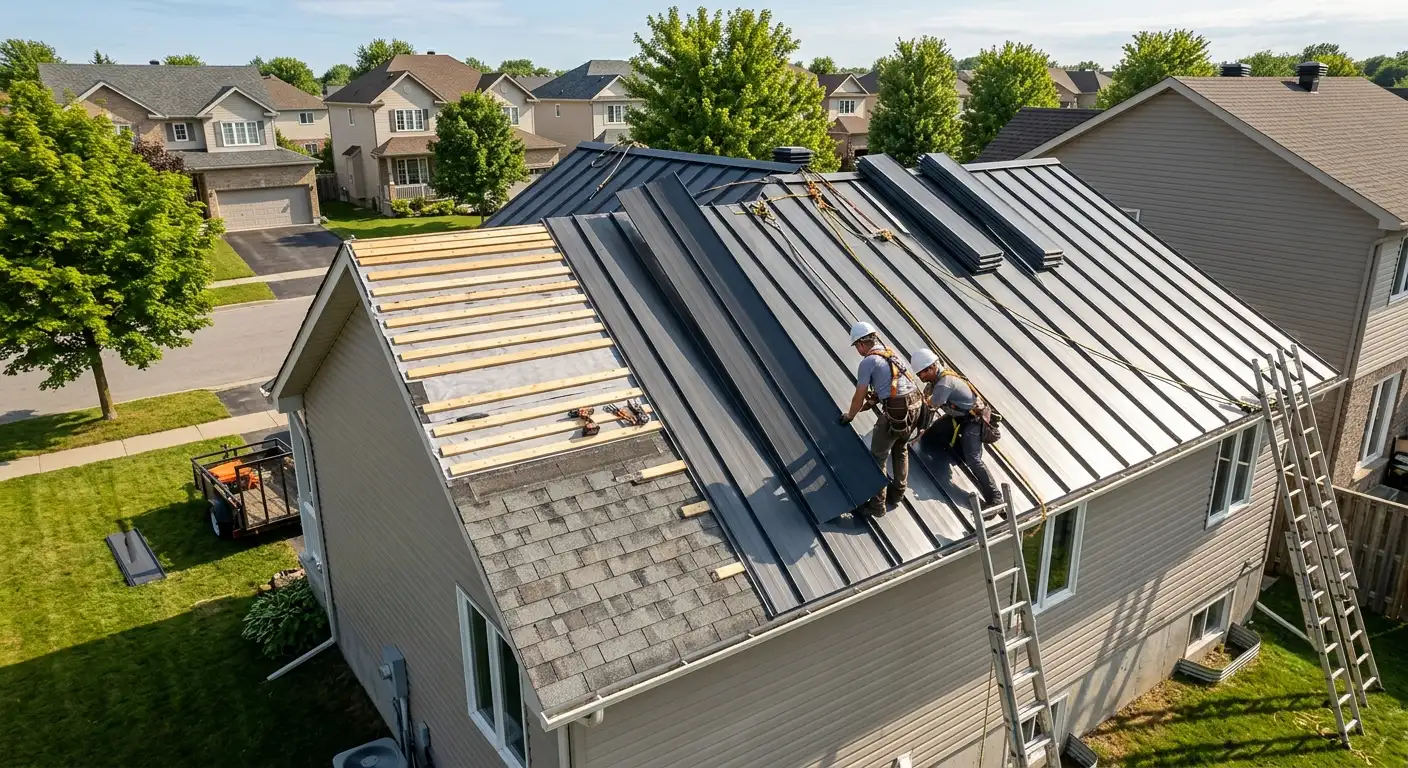
Metal roofing works differently. A metal roof is not typically laid flat directly on top of the old shingles. Instead, it is installed over a system of strapping — horizontal wood strips (also called furring strips or purlins) fastened to the roof deck through the existing shingles. The metal panels then attach to this strapping rather than to the shingles themselves.
This strapping system is the defining feature of a metal-over-shingles installation, and it is what makes metal such a good candidate for going over an existing roof. It creates a level, solid mounting surface, accommodates the profile of the panels, and — critically — creates an air gap that manages condensation.
Why the Strapping System Matters
The strapping does several jobs at once, and each one is important to the long-term performance of the roof.
It creates a level mounting surface. Old asphalt shingles have a textured, uneven surface. Fastening metal directly to that surface would telegraph every imperfection and create an uneven finish. Strapping provides a flat, consistent plane for the panels.
It creates an air gap for condensation management. This is the most important function. Metal roofing can experience condensation on its underside when warm, moist air from inside the home meets the cold metal in winter. The air gap created by the strapping allows this moisture to ventilate and dry rather than becoming trapped against the old shingles, where it could cause rot.
It distributes the load. The strapping spreads the attachment points across the roof structure rather than concentrating stress, contributing to the metal roof's excellent wind resistance.
It provides a secure fastening base. Metal panels and their concealed clips or exposed fasteners attach to solid wood strapping, creating a far more secure installation than fastening into aging shingles would allow.
The Weight Advantage of Metal
One of the strongest arguments for going metal-over-shingles rather than shingle-over-shingle comes down to weight. Asphalt shingles are heavy — a second layer of asphalt adds significant weight to the roof structure, and this is one reason building codes limit asphalt roofs to two layers.
Metal roofing is one of the lightest residential roofing materials available, typically weighing far less per square than asphalt. Installing lightweight metal over a single existing layer of shingles adds minimal load to the structure — often less than a second layer of asphalt would. For homeowners whose homes already carry one layer of shingles, metal is frequently the better choice for a second-layer installation precisely because it does not burden the framing.
For a broader look at how metal compares to asphalt across all factors, see our asphalt shingles vs. metal roofing comparison.
Condensation and Ventilation Considerations
The single most important technical consideration in any metal-over-shingles installation is moisture management. Done correctly, it produces a roof that lasts decades. Done poorly, it can trap moisture and cause hidden damage.
The air gap created by the strapping is the first line of defence, but it works in concert with the home's overall attic ventilation. A metal roof over shingles requires that the attic below is properly ventilated so that warm, moist household air is exhausted rather than driven up against the cold roof assembly.
In some installations, an underlayment or a ventilated membrane is added between the shingles and the strapping for additional moisture protection. The right approach depends on the specific roof, the existing shingle condition, and the ventilation situation — which is exactly why professional assessment matters for this type of project.
When Metal-Over-Shingles Is a Good Idea
Installing metal over existing shingles makes sense when several conditions are met:
- The existing shingles are relatively flat and in reasonable condition — not badly curled, buckled, or deteriorated
- There is only one existing layer of shingles — going over multiple layers is generally not advisable
- The roof deck underneath is sound — no rot or structural issues that need to be addressed
- The roof structure can carry the (modest) additional load — almost always the case with lightweight metal
- Attic ventilation is adequate or can be made adequate — essential for condensation management
- You want to avoid tear-off costs and landfill waste — a genuine environmental and cost benefit
When these conditions are met, metal-over-shingles is an efficient, cost-effective, and durable choice. It avoids the dump fees and labour of a full tear-off, reduces landfill waste, and delivers all the longevity benefits of metal roofing.
When Tear-Off Is Still Required
Metal-over-shingles is not always the right call. A full tear-off is necessary or advisable when:
- The roof deck is damaged or rotted — the deck must be inspected and repaired, which requires removing the existing roofing. See our guide on roof repair vs. replacement for how deck condition factors in
- There are already two layers of roofing — code limits and structural concerns generally rule out adding more
- The existing shingles are severely deteriorated — badly curled or buckled shingles create an uneven base even with strapping
- There is evidence of existing moisture problems — trapping a moisture issue under a new roof compounds it
- Local building code or permit conditions require it — some situations mandate tear-off
An honest contractor will tell you when tear-off is the better path even though it costs more, because installing metal over a compromised roof only hides problems that will resurface later.
Building Code and Layer Rules in Ontario
Ontario building code and local requirements govern how many layers of roofing a structure may carry and under what conditions. In general, roofs are limited to two layers of roofing material, and the structure must be able to support the load. Because metal is lightweight, a metal-over-shingles installation over a single existing layer typically satisfies these requirements comfortably.
Permit requirements vary by municipality across the Ottawa Valley. A qualified local contractor familiar with the requirements in Lanark, Perth, Carleton Place, and surrounding areas will handle the code considerations and ensure the installation complies. This is one of many reasons to work with an established local roofing contractor rather than an out-of-area installer.
Warranty Implications
Metal roofing manufacturers warranty their products based on proper installation, and a correctly executed metal-over-shingles installation by a qualified contractor maintains full warranty coverage. The key phrase is "correctly executed" — the strapping, ventilation, and fastening must all meet the manufacturer's specifications.
It is worth noting that installing metal over shingles does not void the metal roof's warranty when done to specification. What matters is that the installation follows the manufacturer's requirements and that the underlying conditions (deck soundness, ventilation) support a durable result. Our guide on understanding roof warranties in Ontario covers how manufacturer and workmanship coverage combine.
Cost Compared to Full Tear-Off
Metal-over-shingles typically costs less than a metal roof installed after a full tear-off, because you avoid the labour of removing the old roofing and the dump fees for disposing of it. The savings are real, though they should never come at the expense of a sound installation.
The right way to think about it: if your roof qualifies for a metal-over-shingles installation, you capture genuine savings while getting a 40-to-50-year roof. If your roof does not qualify — because the deck needs work or the shingles are too deteriorated — the tear-off cost is not optional, it is necessary. For a broader breakdown of what shapes any metal roof quote, see our guide on what affects the cost of a new roof in Ontario.
Choosing the Right Profile
Once you have decided on metal over shingles, you still choose which metal profile to install. Standing seam and ribbed steel are the two dominant residential options, each with its own aesthetic and performance characteristics. Our guide on standing seam vs. ribbed steel walks through that decision in detail.
Both profiles can be installed over existing shingles using the strapping method, so your profile choice comes down to aesthetics, budget, and the specific characteristics of your home rather than the over-shingles consideration.
Why Professional Installation Is Essential
Metal-over-shingles is a specialized installation that requires experience with the strapping system, condensation management, and the specific requirements of metal roofing. Poor installation — inadequate strapping, insufficient ventilation, improper fastening — can trap moisture and undermine what should be a 50-year roof.
This is not a project for inexperienced installers or a DIY attempt. The combination of working at height, managing the moisture dynamics, and executing the metal installation correctly demands a professional crew that has done it many times. Our overview on why homeowners should consider a metal roof covers the broader case for professional metal installation.
Get Your Free Estimate
Wondering whether your roof is a good candidate for a metal roof over your existing shingles? Our team will assess your roof, check the deck and ventilation, and give you a straightforward recommendation with no obligation.
Fill out the form or reach us directly.
Call us at (613) 259-5766 or contact us to schedule your on-site assessment.
A Smart Path to a Metal Roof
For many Ottawa Valley homeowners, installing a metal roof over existing asphalt shingles is a smart, cost-effective path to a roof that will last for decades. The strapping system, proper ventilation, and professional installation are what make it work. When the conditions are right, you get the full benefit of metal roofing while avoiding tear-off costs and landfill waste. When the conditions are not right, an honest assessment will tell you so. Either way, McKay Roofing has been guiding homeowners through this decision for more than 50 years.