Why Is My Metal Roof Leaking Around the Screws?
Published
A drip beneath a metal roof can make the screws look like the obvious culprit. An exposed fastener can be a leak point when its seal or attachment is compromised, but a drip below a screw does not prove that the screw is where water entered. The panel laps, flashing and other details also need to be considered before a repair is chosen.
If you are looking for metal roof repair in Ottawa or the surrounding Valley, begin with the symptom and the roof type. A useful inspection should explain what failed, whether the issue is isolated and how the proposed work addresses it. “Tighten all the screws” is not a diagnosis, and more force is not automatically a better seal.
First, identify the kind of metal roof you have
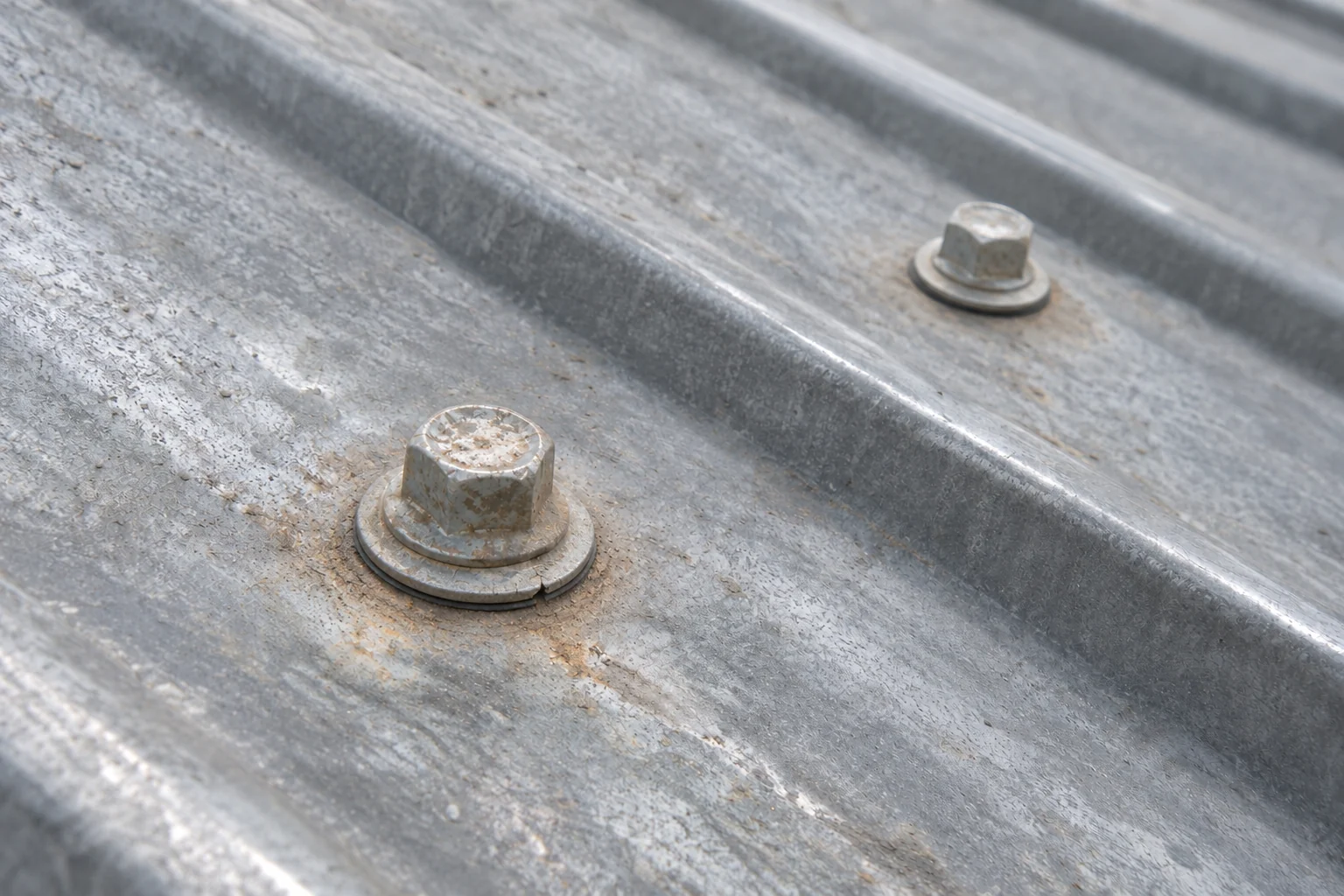
On an exposed-fastener roof, the screws that secure the panels are visible on the roof surface. The fastener and its sealing components form part of the weatherproofing detail. That makes their condition relevant when investigating a leak, but it does not make every visible screw defective.
Other metal-roof systems use different attachment arrangements. Avoid transferring advice for one panel profile to another simply because both roofs are steel. McKay’s residential metal and steel roofing page describes ribbed steel, standing seam and steel shingles as different options. Its standing seam versus ribbed steel guide explains the broader distinction.
If you have product documentation, give it to the roofer. If you do not, a clear photograph from a safe location can help start the conversation. You do not need to know the screw specification before requesting a roof inspection, and you should not select replacement fasteners by appearance alone.
What can go wrong at an exposed fastener?
A sealing washer may no longer seal properly
The condition of the washer matters as well as the screw head. A deteriorated or damaged sealing component may no longer perform as intended. The inspection should consider the actual fastener assembly and surrounding panel, not just whether the screw appears to be present.
Visible weathering is a reason to investigate, rather than a complete diagnosis. A photograph may show a suspect detail, but it cannot establish every condition beneath it. Ask the roofer to explain which findings support the recommended repair and whether similar details elsewhere need checking.
Installation or attachment may be unsuitable
Fastener alignment, seating and attachment are important. An angled screw or an improperly seated washer may not provide the intended seal. Overdriving a fastener can damage its sealing detail; simply tightening a suspect screw further can therefore make the situation worse.
The correct response depends on the roof system and the condition of the hole, panel and supporting material. A contractor should specify a compatible repair rather than assume that a larger screw, more sealant or a higher torque setting is appropriate for every roof.
The surrounding panel or detail may be the real problem
Corrosion, damaged metal, laps and nearby flashing can change the repair scope. A fastener replacement alone is not a complete answer if the material around it is no longer suitable. Equally, one suspect screw does not automatically mean that all the panels need replacement.
McKay’s metal roof repair page specifically describes experience replacing or re-screwing barn roofs. That supports discussing an existing steel roof with the company, while leaving the actual repair method to an assessment of your building.
Why the indoor drip may not locate the entry point
Think of the indoor mark as one observation in the investigation. Record where water appears and when it happens, but avoid presenting an assumed entry point as an established fact. The route between the exterior surface and the room below may not be obvious from indoors.
A leak reported only during wind-driven rain gives different information from one noticed during a thaw. These timing clues do not prove a cause. They help the roofer decide which conditions and details to investigate. McKay’s residential roof repair service addresses identifying roof-leak problems and deciding whether repair or replacement is needed.
For a hypothetical example, imagine a workshop with a drip below a visible row of screws. The owner notices it after several storms and asks for that row to be tightened. A more useful request would describe the storms, the indoor location and any previous repairs, then ask the contractor to trace the entry route. The final repair might involve fasteners, another detail or more than one issue. The inspection should establish that scope.
What you can document before the visit
Keep the preparation simple. Record the date, weather and location of each observed leak. Save photographs of indoor staining and any roof images already available. Note whether the problem started recently, returned after a repair or has been present for several seasons.
Gather invoices and product paperwork if you have them. A record of previous re-screwing, panel replacement or coating work can help the contractor understand the current assembly. Do not assume an earlier repair was wrong simply because the roof now leaks; explain what was done and whether the symptom changed afterward.
Leave roof access and close inspection to someone equipped for the job. Metal surfaces can be slippery, and an apparently small task may involve damaged or unsupported areas. Avoid walking on panels, loosening fasteners or applying test patches to see whether the leak stops. Those actions can obscure the original problem and introduce new ones.
Questions that make a repair quotation more useful
Before approving work, ask for answers to the questions that affect the scope:
- What was found? Ask which observations identify the likely entry point and what remains uncertain.
- How extensive is it? Distinguish one local defect from a wider pattern of fastener, panel or detail problems.
- What components are included? Clarify whether the work covers fasteners only, damaged panels, flashing or other repairs.
- Why is the proposed method suitable? The selected products and details should match the roof system and substrate.
- How will completion be documented? Ask for a record of the work and any recommended follow-up.
These questions help compare proposals without turning the homeowner or building owner into the installer. They also make exclusions visible. A quote for one localized repair should not be mistaken for an inspection and renewal of every fastening point on the roof.
Repair decisions should follow the condition of the roof
A localized problem may justify a limited repair, while more widespread deterioration may require a broader repair or replacement plan. The distinction should come from the inspection. The number of years a roof has been in place, or the visibility of a few weathered screws, is not enough on its own to settle the choice.
Keep the findings and repair record with your roof documents. If water returns, report where and when it appeared rather than assuming it is exactly the same failure. The aim is a clear chain from symptom to inspection, defined work and follow-up—not repeated guesses at the nearest screw.
Get Your Free Estimate
Concerned about a leak or weathered fasteners on your metal roof? McKay Roofing can discuss your roof-repair needs and assess the appropriate next step. Let the team know the building type, roof history and when the leak occurs.
Request an estimate through our contact form or reach us directly.
Call (613) 259-5766 or contact us to discuss metal roof repair in Lanark and the Ottawa Valley.