
Roof Leak or Attic Condensation? Why Water Can Appear in Winter
Published
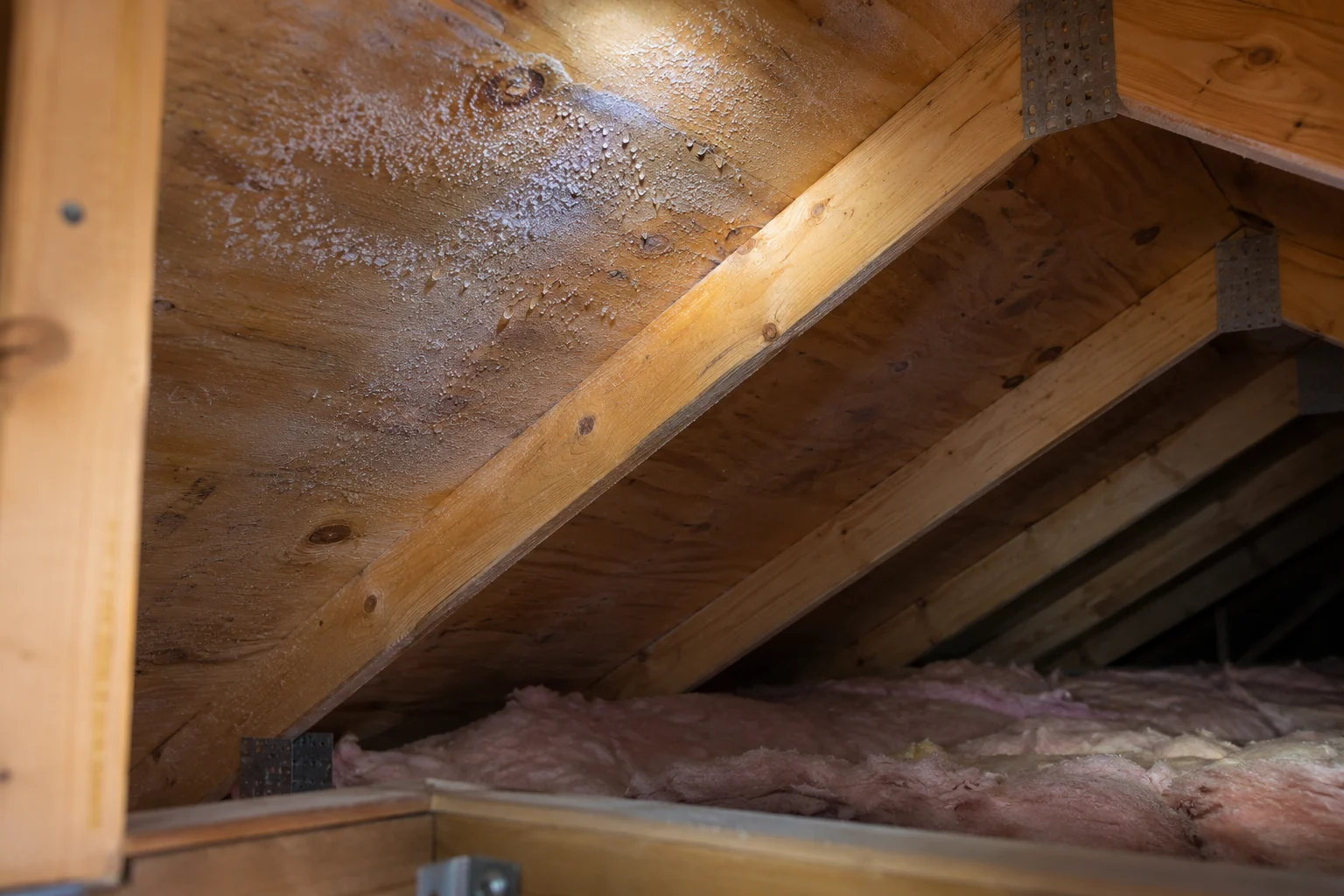
A ceiling stain during an Ottawa Valley winter can look like a straightforward roof leak. Sometimes it is. But water can also originate as moisture inside the home, reach a cold attic surface and later appear as droplets when conditions change. The timing and pattern of moisture can help an investigation, but they cannot reliably distinguish a roof leak from attic condensation on their own.
The practical first step is to record what happened and arrange an assessment of the relevant roof and attic conditions. Avoid choosing between “new roof” and “more vents” before the cause is understood. Both are substantial responses to a problem that still needs to be identified.
Two winter situations that can look similar indoors
The following examples are hypothetical. They show how to describe the problem, not how to diagnose your house from a checklist.
Water appears after a cold spell and a thaw
Imagine a homeowner who notices a damp ceiling patch on a milder day following a long cold spell. There has been little recent rain. An accessible attic view shows moisture on part of the roof sheathing. This makes condensation worth investigating, but it does not rule out water entering from outside during a thaw. If ice buildup is part of the concern, ask about ice-dam roof repairs as part of the assessment.
Useful observations include the date, outdoor conditions and whether the dampness has appeared before. The homeowner should report those facts without concluding that the shingles or vents are definitely responsible. A contractor can then consider both the exterior roof and conditions in the attic.
A stain returns during particular storms
Now consider a stain that becomes wet during some rainstorms and stays dry during others. That history is valuable for a roof-leak investigation, especially when paired with the location and earlier repair records. It still does not identify the failed component by itself.
A stain near a chimney does not prove that the chimney flashing is the only possible source. Likewise, water noticed near a roof vent does not automatically mean the vent is leaking. The aim is to preserve the observations so an inspection can test possible explanations.
What attic condensation means
Warm indoor air can carry moisture into an attic through air leaks. When that moisture reaches sufficiently cold surfaces, condensation or frost may form. A later warm-up can turn accumulated frost into water. That is one reason winter moisture deserves attention even when no obvious hole is visible in the roof covering.
Air leakage, indoor moisture and ventilation need to be considered together. Adding vents alone does not correct every moisture problem. The actual route by which moisture reaches the attic matters, and the appropriate response depends on the home's construction and findings.
McKay’s improper-ventilation repair page discusses condensation being mistaken for a roof leak. Its attic ventilation service describes the role of intake at the eaves and ventilation at the roof. These are relevant services to discuss when an assessment identifies ventilation concerns; they are not a promise that ventilation work will solve every winter stain.
Describe the pattern without turning it into a diagnosis
A good record can be brief. Note the date of each event and whether the ceiling is actively wet, newly stained or showing an old mark. Photographs taken from the same position make changes easier to compare. Include a wider room view so the location remains clear later.
If there is a safe, existing view into the attic, describe what is visible without disturbing materials or entering an area you cannot safely access. “Moisture visible across part of the sheathing” is more useful than “the whole roof is leaking” when only one area has been seen. You do not need to enter the attic to request help.
Keep an observation list that separates facts from assumptions:
- When: dates, recent weather and whether the event followed a cold spell, thaw or rain.
- Where: the room and approximate ceiling location, with photographs where available.
- What changed: new wetness, spreading marks or a repeated pattern.
- What was already done: previous roof repairs, ventilation work or other relevant changes.
- What is unknown: areas you cannot see, missing roof records or an uncertain installation date.
Mention bathroom or kitchen ventilation concerns if you have noticed them, but do not attempt to trace or alter ducts as part of a casual inspection. Similarly, do not cover roof vents or move insulation in an effort to make the attic warmer. Report the concern and ask which parts of the building need assessment.
What the assessment should clarify
The most useful outcome is an explanation that links the findings to the recommended work. If roof repairs are proposed, ask what evidence indicates exterior water entry and which details will be repaired. If ventilation changes are proposed, ask what condition was found and how the work addresses it.
McKay’s residential roof repair service covers investigating leaks and determining an appropriate repair or replacement response. A moisture assessment may also identify issues outside the roofing work being quoted. Ask who needs to address those items rather than assuming that every proposed service includes insulation, ductwork, air sealing or interior restoration.
This distinction helps avoid gaps between trades. For example, a roof quotation might address an exterior defect while a separate issue inside the home still needs attention. Written findings should make the boundary clear. The homeowner should know what is included, what remains uncertain and which follow-up is recommended.
Why a roof replacement is not the starting assumption
A ceiling stain is a symptom, not a complete condition report. It cannot establish whether the roof needs a small repair, wider work or no replacement at all. Roof age and winter maintenance history are useful context, but neither substitutes for identifying the moisture source.
The same applies to insulation. McKay’s existing attic insulation and roof guide explains the broader relationship, but a wet ceiling does not tell you which insulation change, if any, is appropriate. Avoid commissioning a single improvement on the assumption that it must be the missing piece.
Ask for a written description of the agreed work and retain it with the observations that led to the visit. If moisture appears again, compare the timing and location with the earlier record. This gives the contractor a clearer basis for follow-up than starting again with an undated photograph.
When the situation needs prompt attention
Active water entry, a sagging ceiling or water near electrical fittings requires prompt attention. Keep people away from the affected area and explain the conditions when requesting assistance. Do not poke a ceiling, handle wet electrical equipment or climb onto a snowy roof to investigate.
For a less immediate concern, arrange an assessment rather than waiting for another winter to see whether the pattern repeats. An old dry stain and a new active drip should be described differently, but both can be discussed with the roofer. Clear information helps the team understand what you are seeing without promising a diagnosis before the visit.
Get Your Free Estimate
Unsure whether winter moisture is coming from your roof or attic conditions? Contact McKay Roofing to discuss a roof and ventilation assessment. Share when the moisture appears and any photographs or previous repair records you have.
Request an estimate through our contact form or reach us directly.
Call (613) 259-5766 or contact us to discuss the next step for your Lanark or Ottawa Valley home.