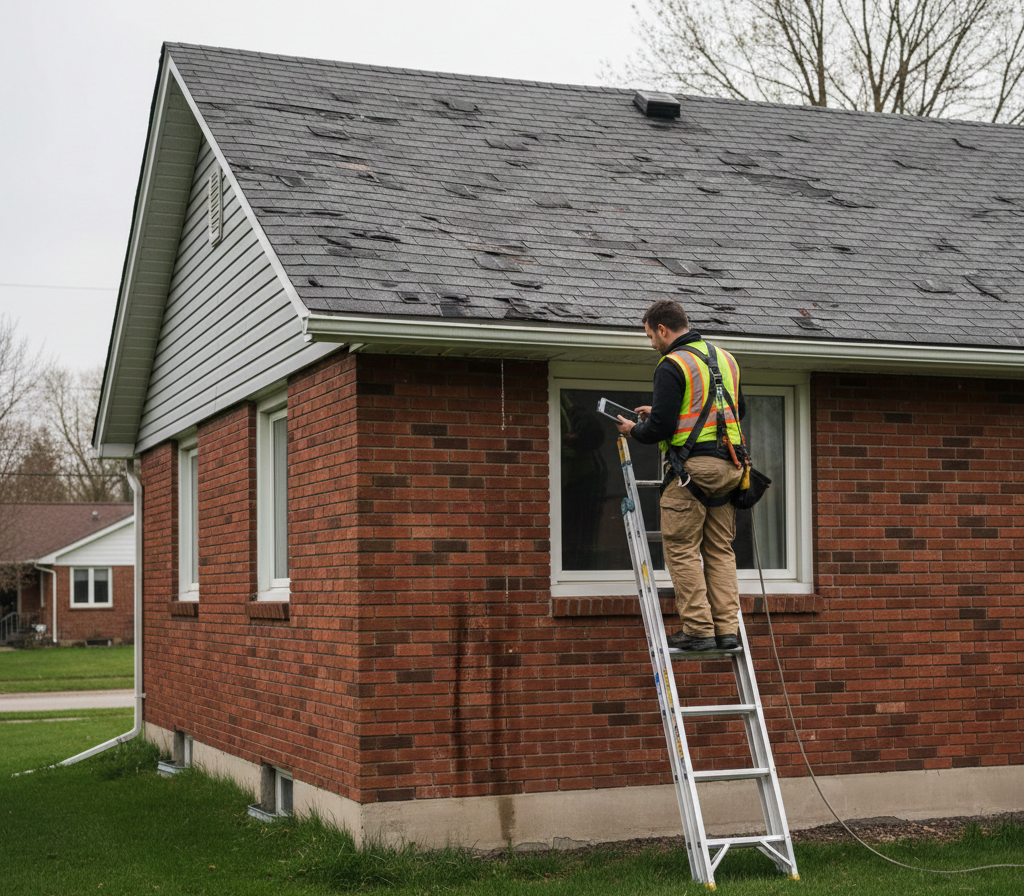
A roof repair doesn’t wait for a convenient time. Whether it’s a tree limb crashing through your roof during a midnight ice storm or water pouring through your ceiling after a spring downpour, Smiths Falls homeowners need to understand when immediate professional intervention is necessary and what steps to take while waiting for help to arrive.
What Qualifies as an Urgent Roof Situation
Not every roofing problem demands an immediate call, but several situations require immediate professional attention. Recognizing the difference helps you respond appropriately and prevents minor issues from escalating into catastrophic damage.
Active Water Intrusion
Water visibly entering your home through the ceiling or walls constitutes a serious situation. Even a small, steady drip can cause thousands of dollars in structural damage, destroy insulation, ruin personal belongings, and create conditions for mould growth within 24 to 48 hours.
If water is entering your home during or after a storm, you need professional help as quickly as possible.
Structural Compromise
When a tree, heavy ice formation, or wind event physically damages your roof structure—breaking through decking, displacing sections of roofing material, or causing visible sagging—the situation poses both water intrusion and safety risks. Compromised roof structures can collapse without warning, particularly under additional snow or ice loads common in the Smiths Falls area.
Large-Scale Material Loss
High winds can strip significant sections of shingles, lift metal panels, or tear membrane roofing from a flat roof. When the exposed area is large enough that temporary measures can’t adequately protect the structure, professional tarping or patching is essential.
Post-Storm Damage with Incoming Weather
Even moderate roof damage becomes urgent when additional storms are forecast. Damage that might otherwise wait a day or two for standard repair requires immediate attention when rain, freezing rain, or heavy snow is approaching.
What to Do Before the Professionals Arrive
While waiting for your roofing contractor, several immediate steps can minimize damage and protect your family.
Protect the Interior
Place buckets, bins, or other containers beneath active leaks. If water is pooling on a ceiling and creating a visible bulge, carefully puncture the centre of the bulge with a screwdriver to release the water in a controlled manner. Allowing water to accumulate risks a sudden ceiling collapse.
Move electronics, furniture, and valuables away from the affected area. Lay down plastic sheeting or tarps to protect flooring.
Document Everything
Photograph and video all damage from multiple angles—both the interior water intrusion and any visible exterior damage. These records prove invaluable for insurance claims. Include timestamps and note weather conditions at the time of damage.
Contact your insurance company promptly to report the incident and begin the claims process.
Avoid the Roof
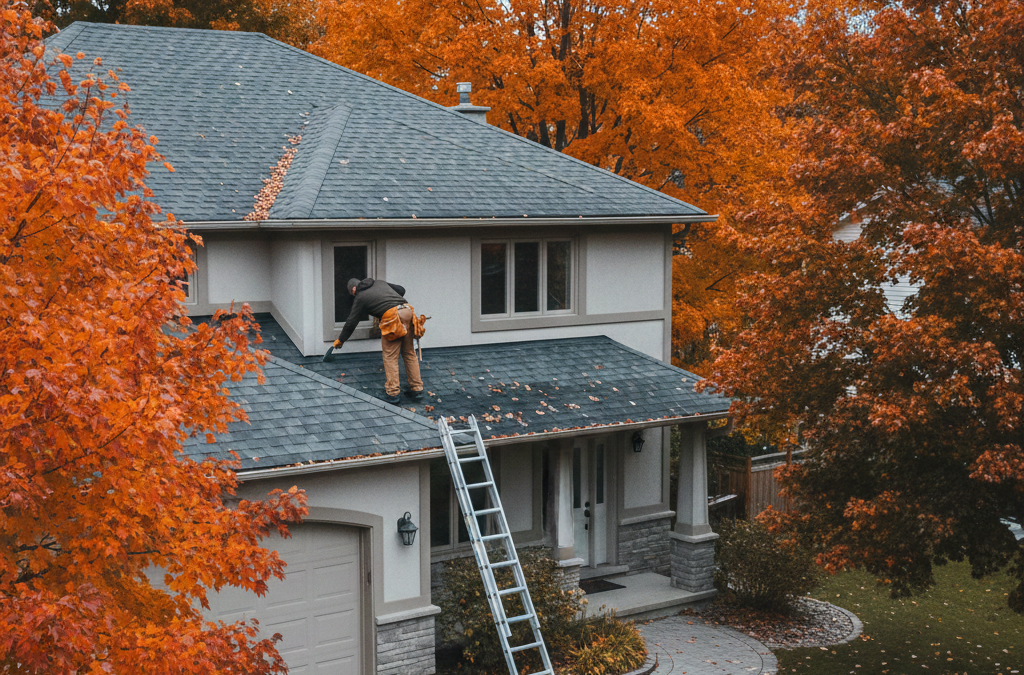
Unless you have specific training and proper safety equipment, do not climb onto a damaged roof. Wet, icy, or structurally compromised roofing surfaces are extremely dangerous. The risk of falls far outweighs any temporary protection you might achieve.
Common Roof Repair Scenarios in Smiths Falls
Smiths Falls sits along the Rideau Canal in Eastern Ontario, exposed to weather patterns that create predictable categories of roofing problems.
Ice Storm Damage
Eastern Ontario’s ice storms rank among the most destructive weather events for residential roofing. The weight of accumulated ice can exceed a roof’s design load, causing structural failure. Ice falling from trees can puncture roofing materials. And ice damming along eaves forces water beneath shingles and into the building envelope.
Understanding ice dam formation and damage helps homeowners recognize early signs of trouble before full emergencies develop.
Wind Events
Severe thunderstorms and occasional tornadoes can strip roofing materials, lift flashing, and propel debris into roof surfaces. Metal roofing panels with compromised fasteners or aging sealants are particularly vulnerable to uplift during high-wind events.
Heavy Snow Accumulation
Smiths Falls receives substantial snowfall each winter. Flat roofs and low-slope sections are especially susceptible to excessive snow loads. Visible sagging, cracking sounds from the structure, or doors that suddenly stick indicate dangerous weight accumulation that warrants immediate snow removal services.
Spring Thaw Flooding
Rapid spring snowmelt combined with rain can overwhelm aging roofing systems. Flashing failures, deteriorated sealants, and clogged drainage systems all become apparent when water volume peaks during the thaw.
Choosing a Roof Repair Contractor
High-pressure situations create urgency to hire the first contractor who answers the phone. Resist this impulse—taking even a few minutes to verify basic credentials protects you from predatory operators who exploit emergencies.
Beware of Storm Chasers
After major weather events, transient contractors flood affected areas offering quick, cheap repairs. These operators often lack insurance, use substandard materials, and disappear before problems emerge. They may ask for full payment upfront and provide no warranty or written contract.
Legitimate contractors like those who serve the Smiths Falls area year-round maintain established offices, carry verifiable insurance, and honour their commitments through subsequent seasons.
Verify Before You Hire
Even in urgent situations, confirm the contractor carries WSIB coverage and liability insurance. Ask for their business address and verify it exists. A quick online search can reveal reviews and company history.
Established local roofing companies with year-round operations handle emergencies routinely. They maintain the equipment, materials, and crew availability to respond quickly without cutting corners.
Temporary Repairs vs. Permanent Solutions
Temporary roof repair aims to stop active damage and protect your home until a permanent solution can be implemented. Understanding this distinction sets appropriate expectations.
Temporary Measures
Tarping, patching, and sealing address immediate threats. These measures are designed to last through the current weather event and provide a window for proper repair planning. They are not permanent fixes.
Follow-Up Assessment
Once the situation is stabilized, a thorough inspection determines the full extent of damage—including problems not visible from the initial response. Your contractor should provide a detailed report and recommend either targeted roof repairs or, if damage is extensive, a complete replacement.
This assessment should be documented in writing and used to support insurance claims.
Preventing Future Roofing Crisis
While no homeowner can prevent severe weather, proactive maintenance dramatically reduces the likelihood of sudden roofing situations.
Schedule professional roof inspections at least once annually, ideally in autumn before winter’s demands arrive. Address minor issues—loose flashing, deteriorating sealants, damaged shingles—before they become major vulnerabilities.
Ensure adequate attic ventilation to minimize ice dam formation. Keep trees trimmed away from your roof line. And maintain clear gutters and downspouts to handle water volume during heavy precipitation.
When in Doubt, Make the Call
Smiths Falls homeowners sometimes delay calling for help, hoping a problem will resolve itself or waiting for weather to clear. This hesitation frequently transforms manageable repairs into major reconstruction projects.
If you’re uncertain whether your situation requires immediate attention, call a qualified local roofing professional and describe what you’re seeing. Experienced contractors can often assess urgency over the phone and advise you on appropriate next steps. Acting quickly protects your home, your belongings, and your family’s safety.