What is Built-Up Roofing?
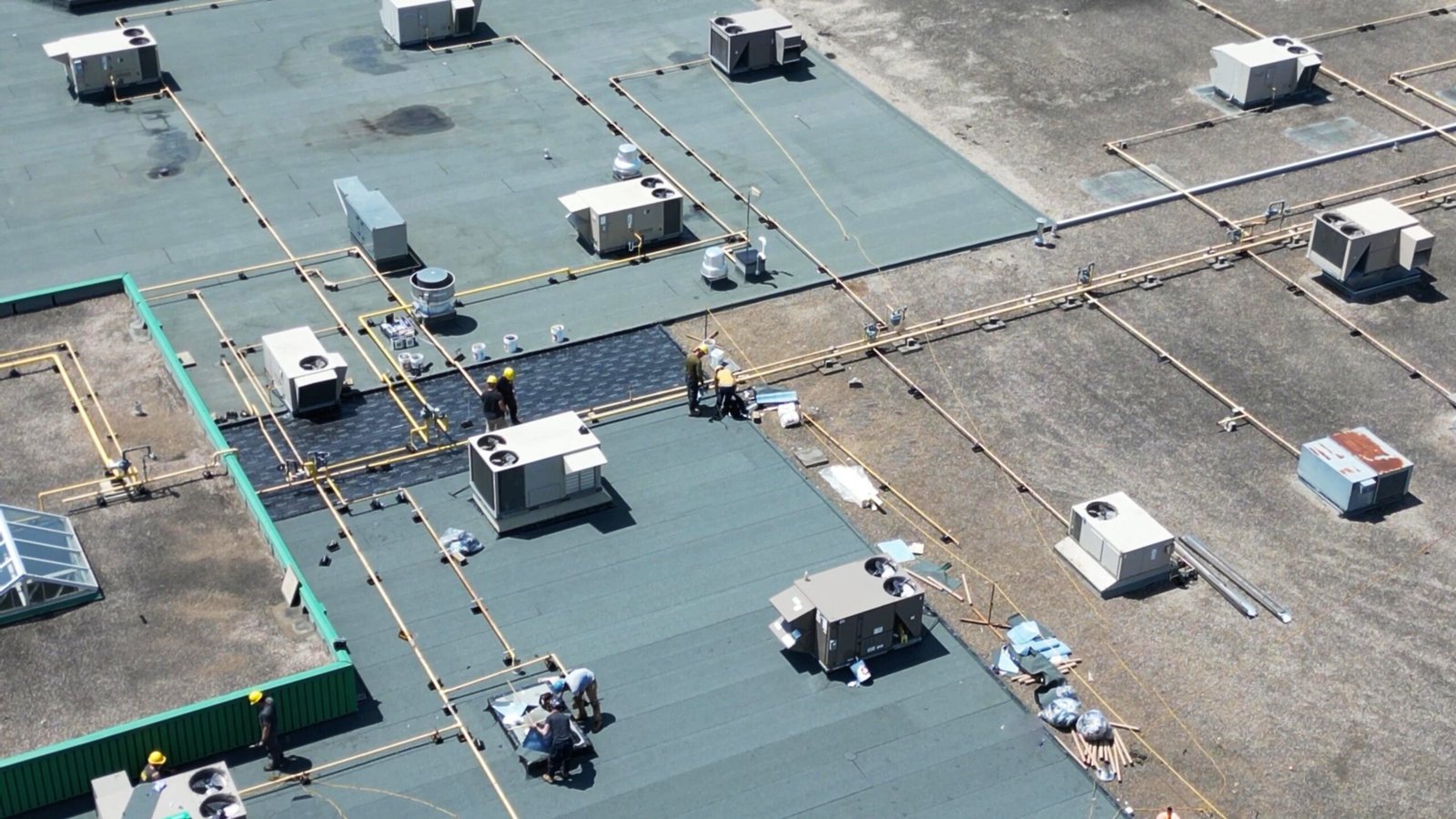
A built-up roof is constructed by alternating layers of bitumen (asphalt or coal tar) and reinforcing fabrics known as roofing felts. These layers are built up to create a thick, durable membrane. The final surface is typically finished with a layer of gravel, mineral cap sheet, or a reflective coating. Built-up roofs have a typical life expectancy of 20-30 years.
Advantages of BUR
- Proven Track Record: BUR has been used for over 100 years and has a long history of reliable performance on commercial buildings.
- Multi-Layer Protection: The multiple layers provide excellent waterproofing and redundancy against leaks.
- UV Protection: The gravel surface reflects UV rays and protects the underlying membrane.
- Fire Resistance: The gravel ballast provides a natural fire-resistant surface.
- Durability: BUR systems can withstand heavy foot traffic, making them suitable for roofs with regular maintenance access.
Why We Recommend Alternatives
- Health & Safety: The installation of BUR involves heating tar and asphalt, producing harmful fumes and creating fire hazards for workers.
- Environmental Concerns: The hot application process releases volatile organic compounds into the atmosphere.
- Better Options Available: Modern single-ply membranes such as EPDM, TPO, and PVC, as well as cold-applied modified bitumen systems, provide equal or superior performance without the associated risks.
- Lower Installation Costs: Modern alternatives are often quicker and less expensive to install.